Gražina Žemaitienė
Publishers of Postcards Featuring Images of Kudirkos Naumiestis (Vladislavov) and Širvinta, 1900–1942
Five Frame Exhibit
Description:
The two border towns of Lithuania and East Prussia, Kudirkos Naumiestis (Vladislavov) and Širvinta, were only separated by the river. Geographically neighboring areas were connected by a common existence, experience and history during peacetimes and years of World War I. Both cities rose from the ruins, the residents restored buildings, businesses, customs and postal services, communicated, competed in trade and smuggling across the border. Seimas of the Republic of Lithuania declared 2025 the year of Paprūsis – the name of the Lithuanian areas near the Prussian border. It was appointed for commemoration of the 500th anniversary of the establishment of the Duchy of Prussia – the first Protestant state in Europe, which had an economic, political, and cultural influence on its Lithuanian neighbors including town of Kudirkos Naumiestis too.
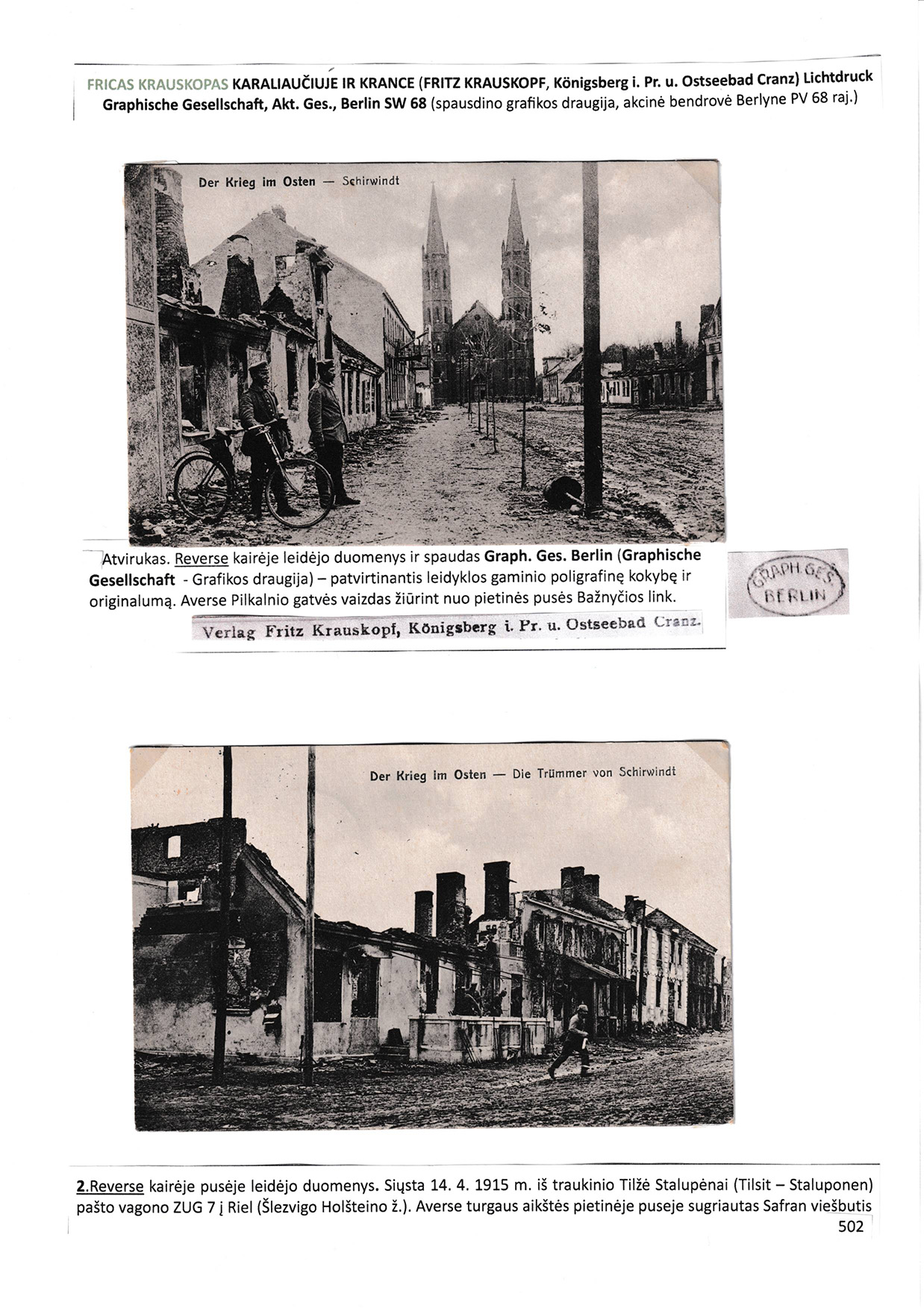
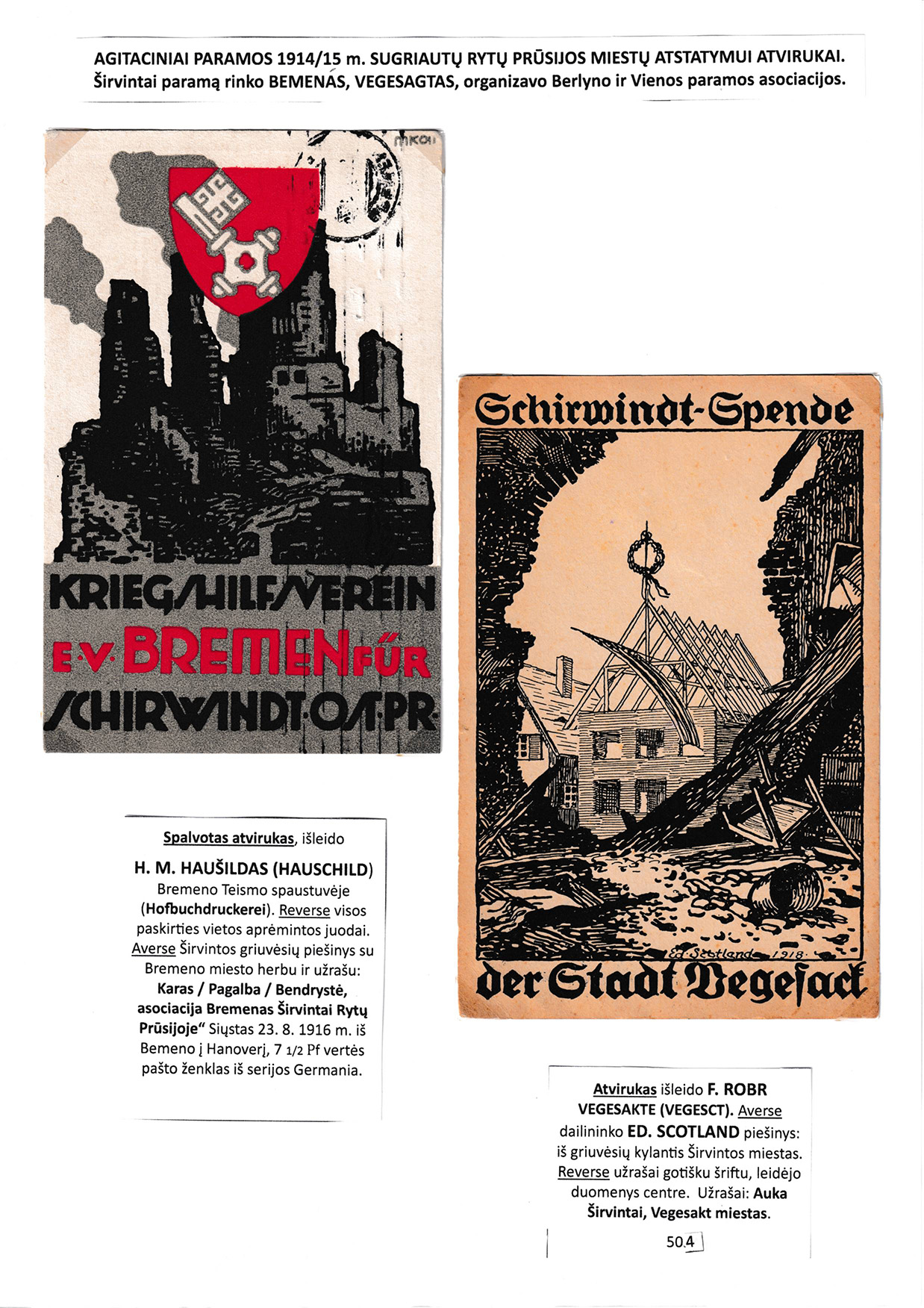
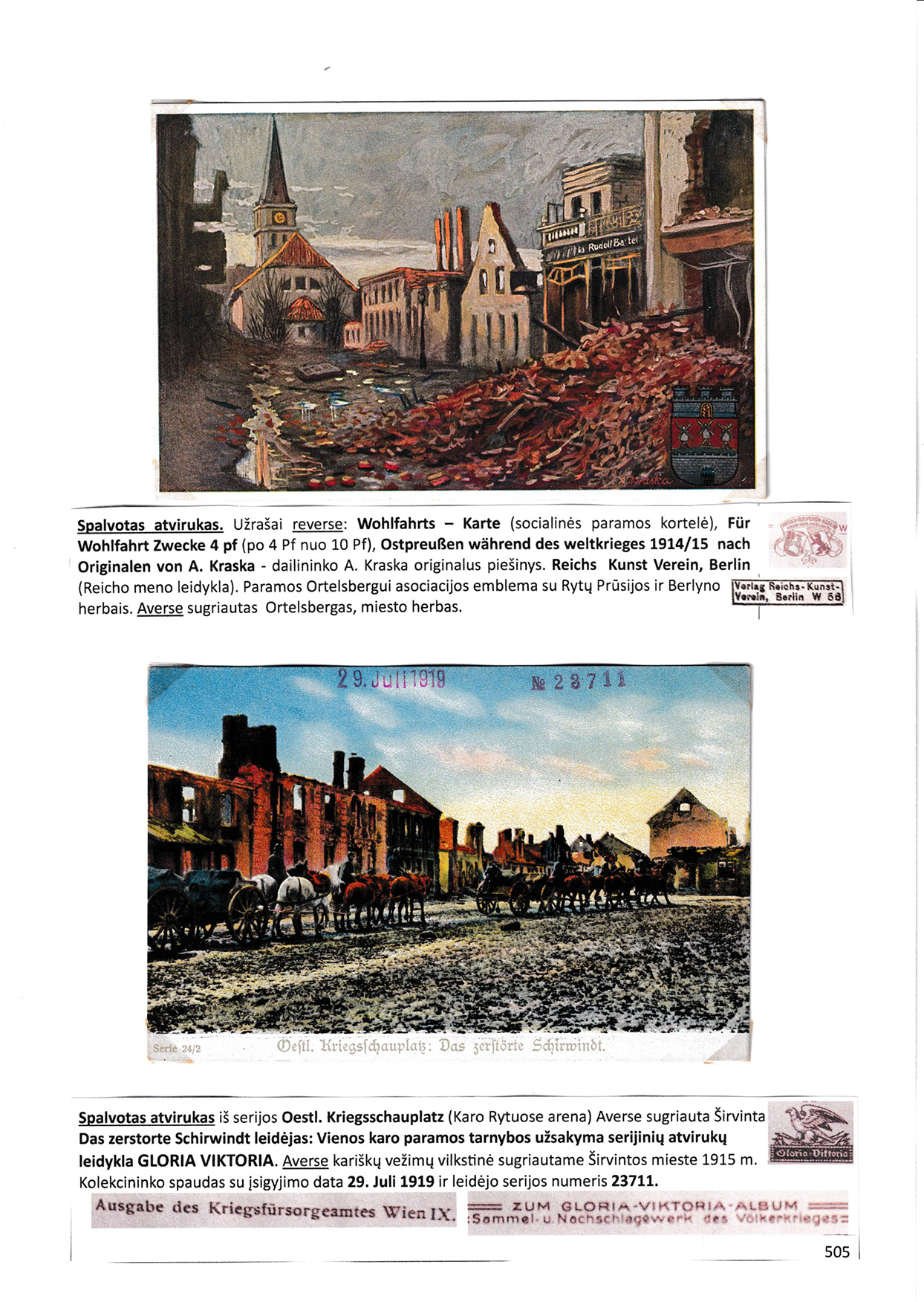
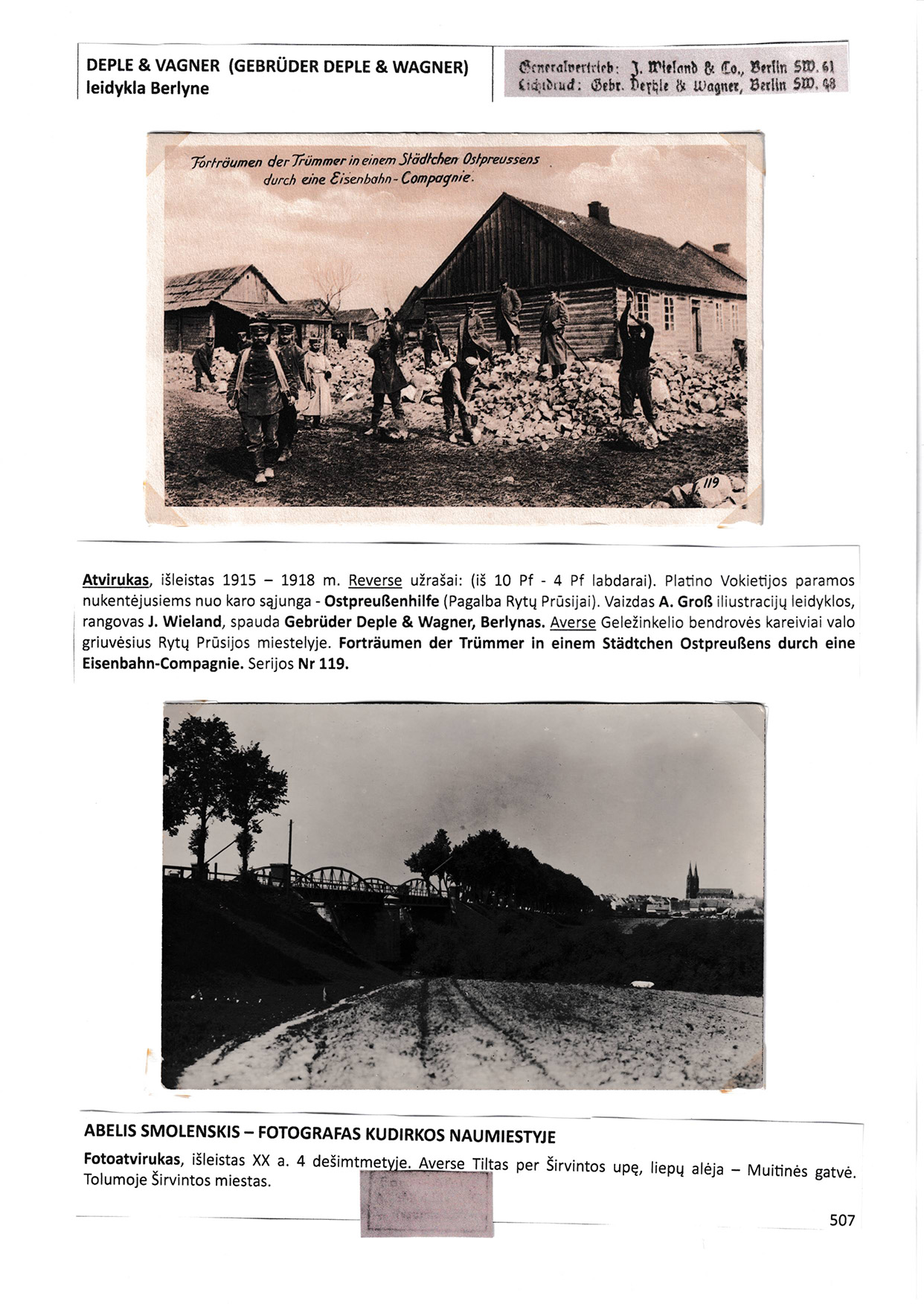
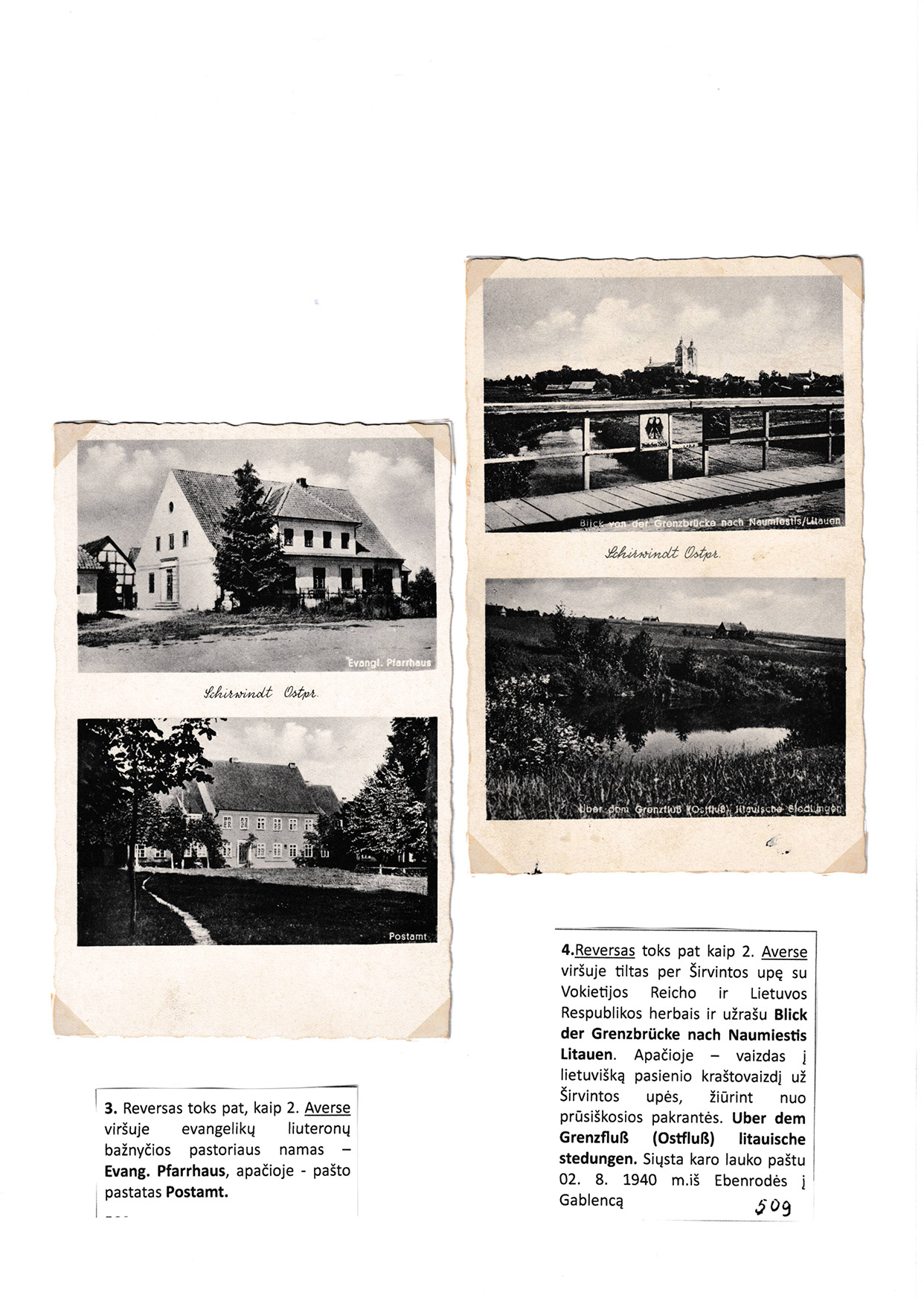
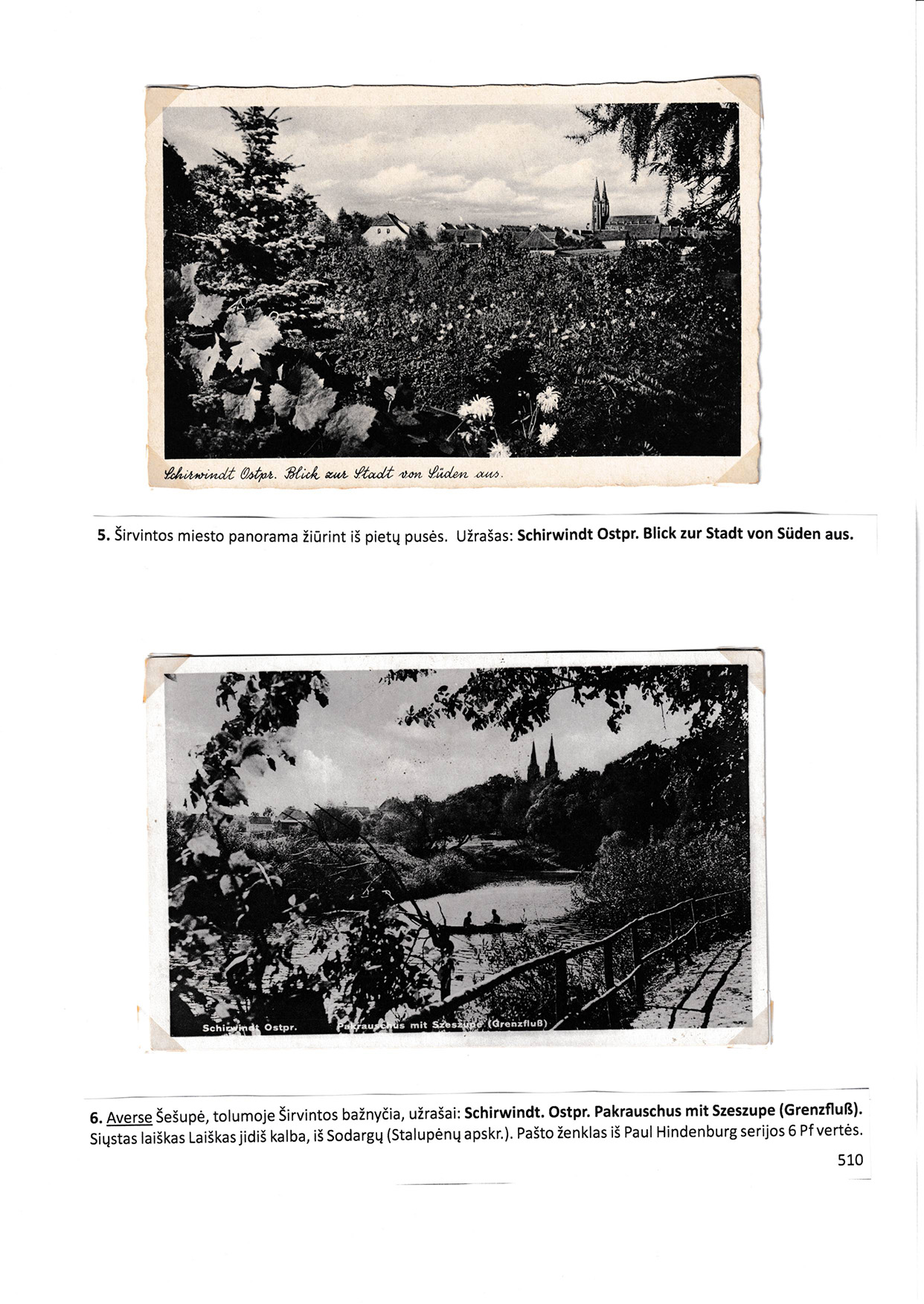
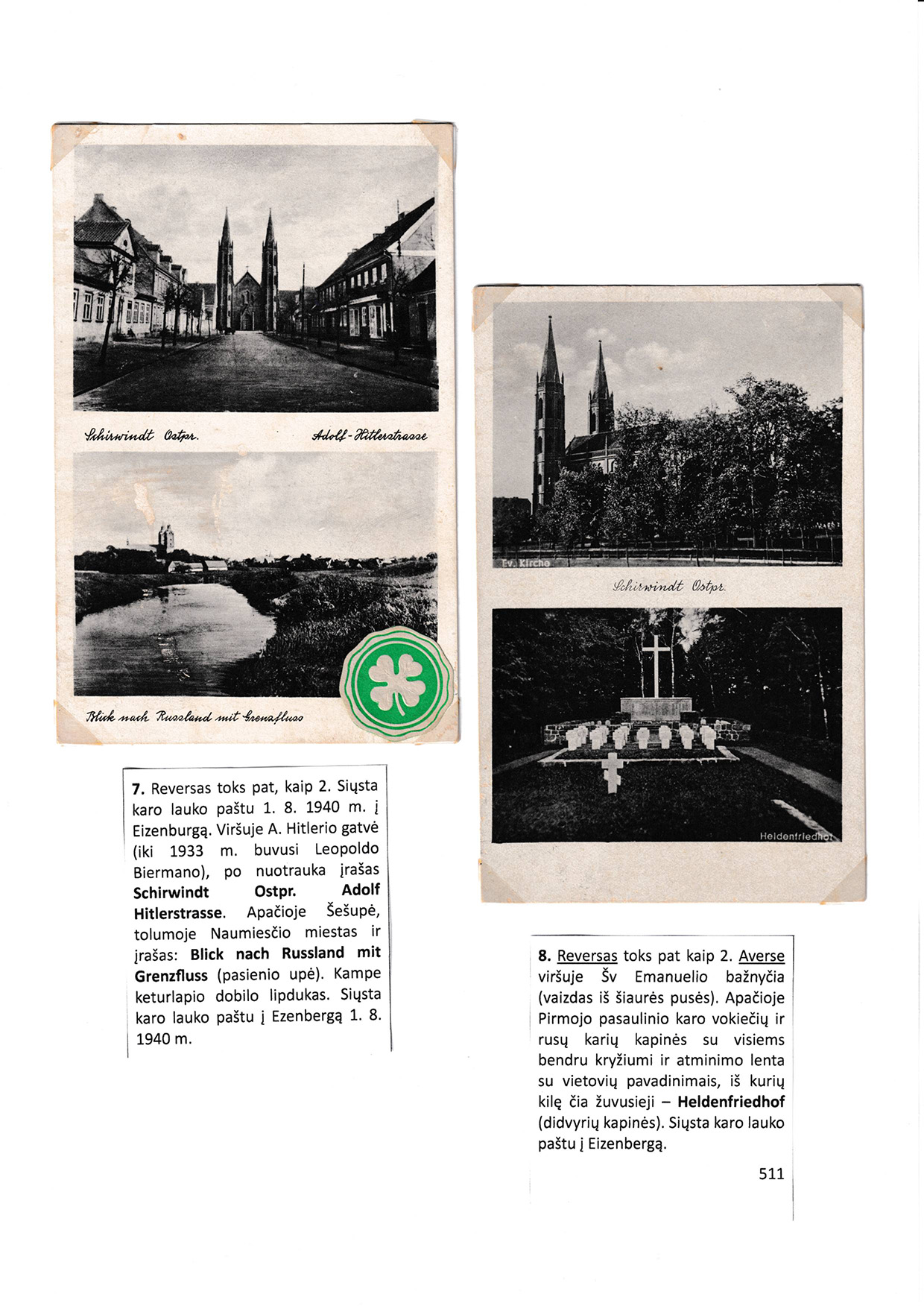
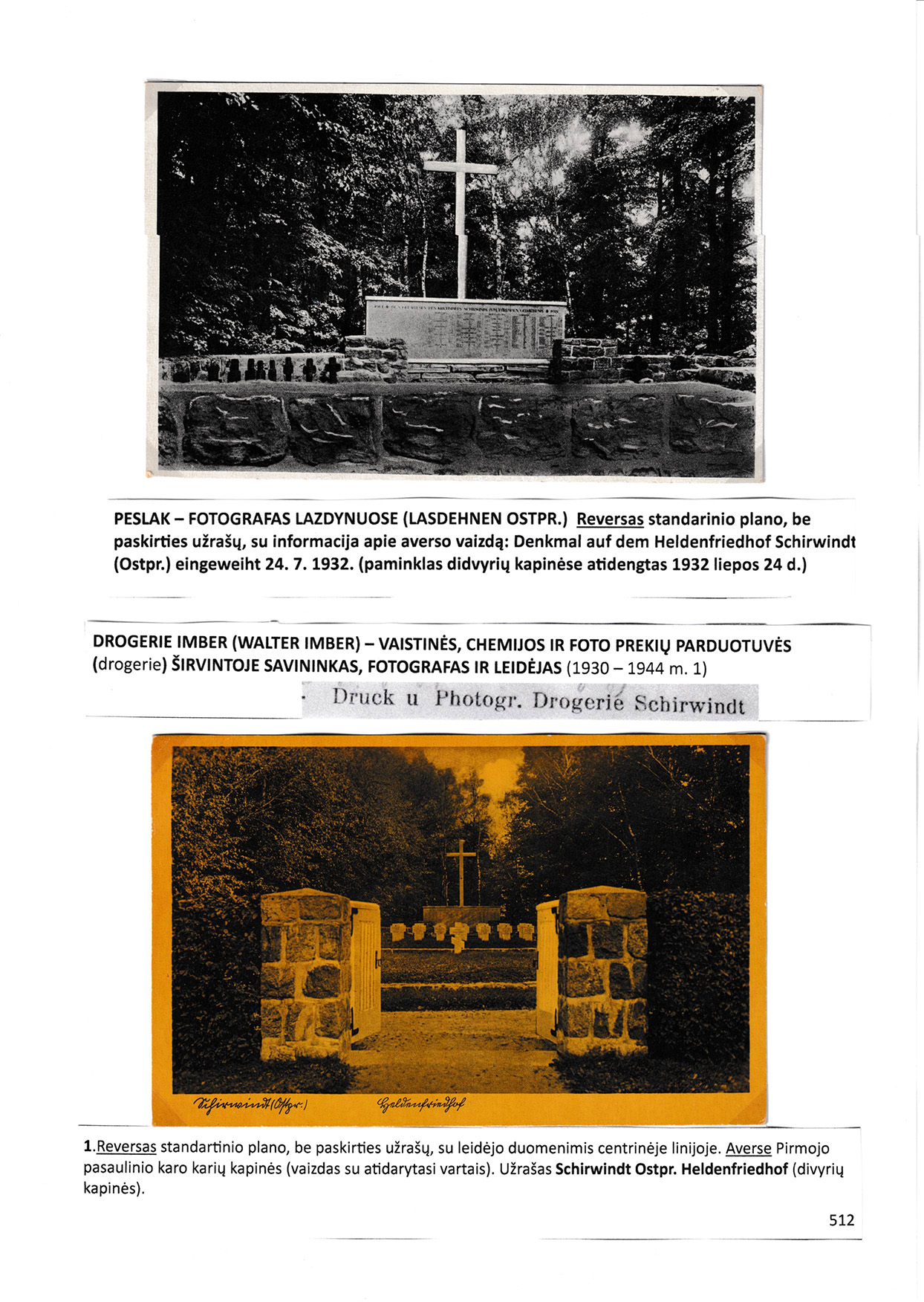
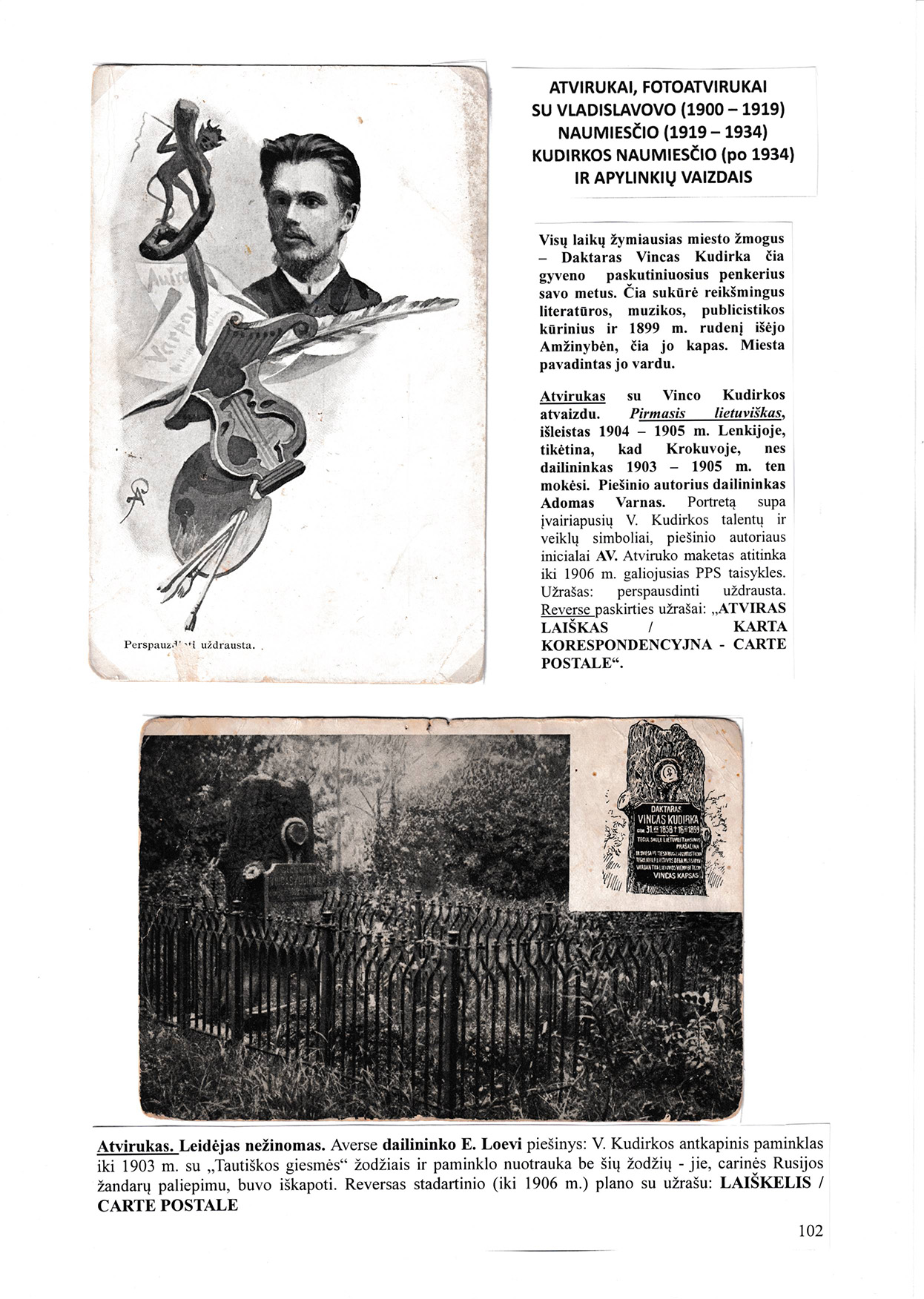
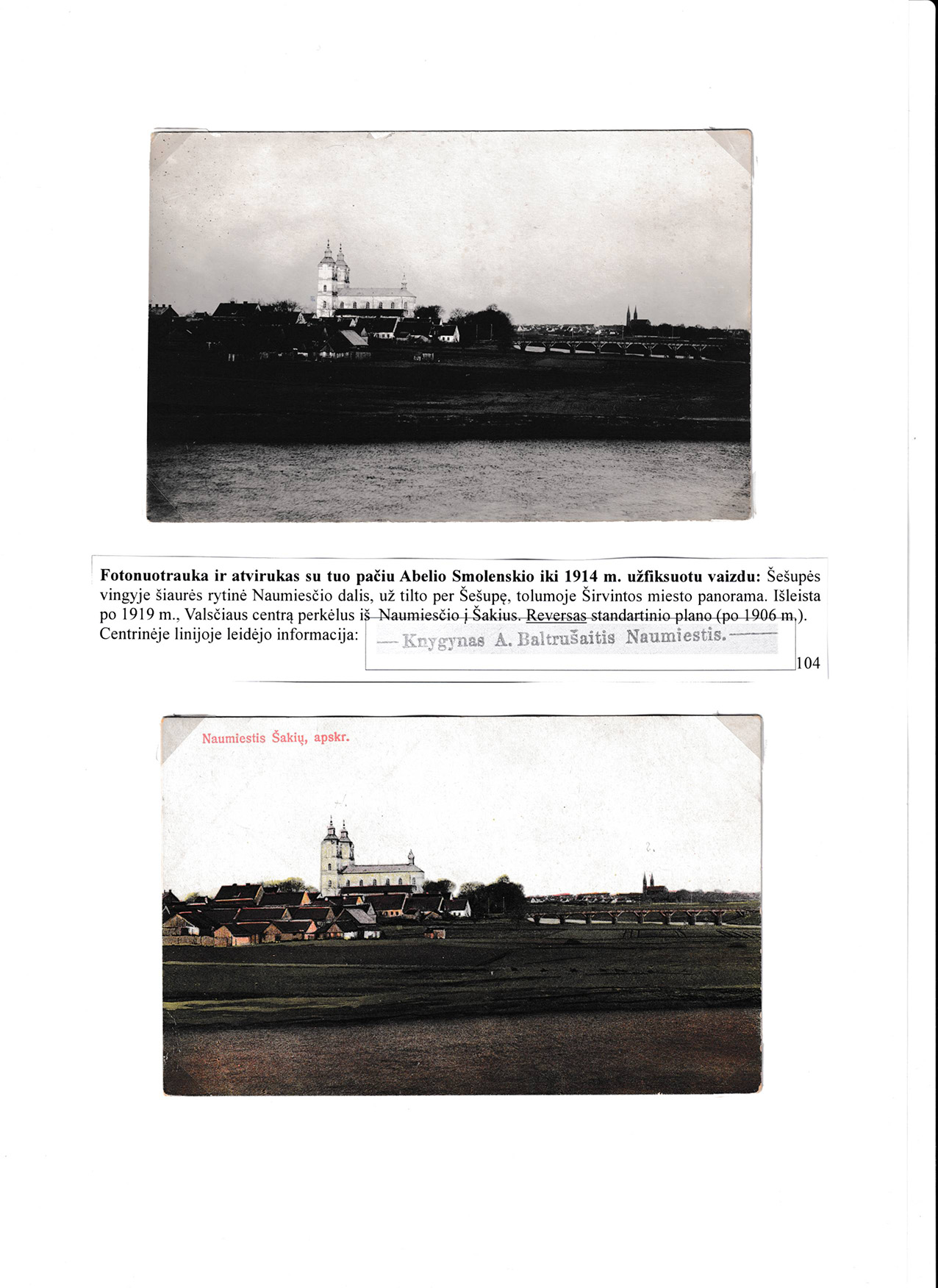
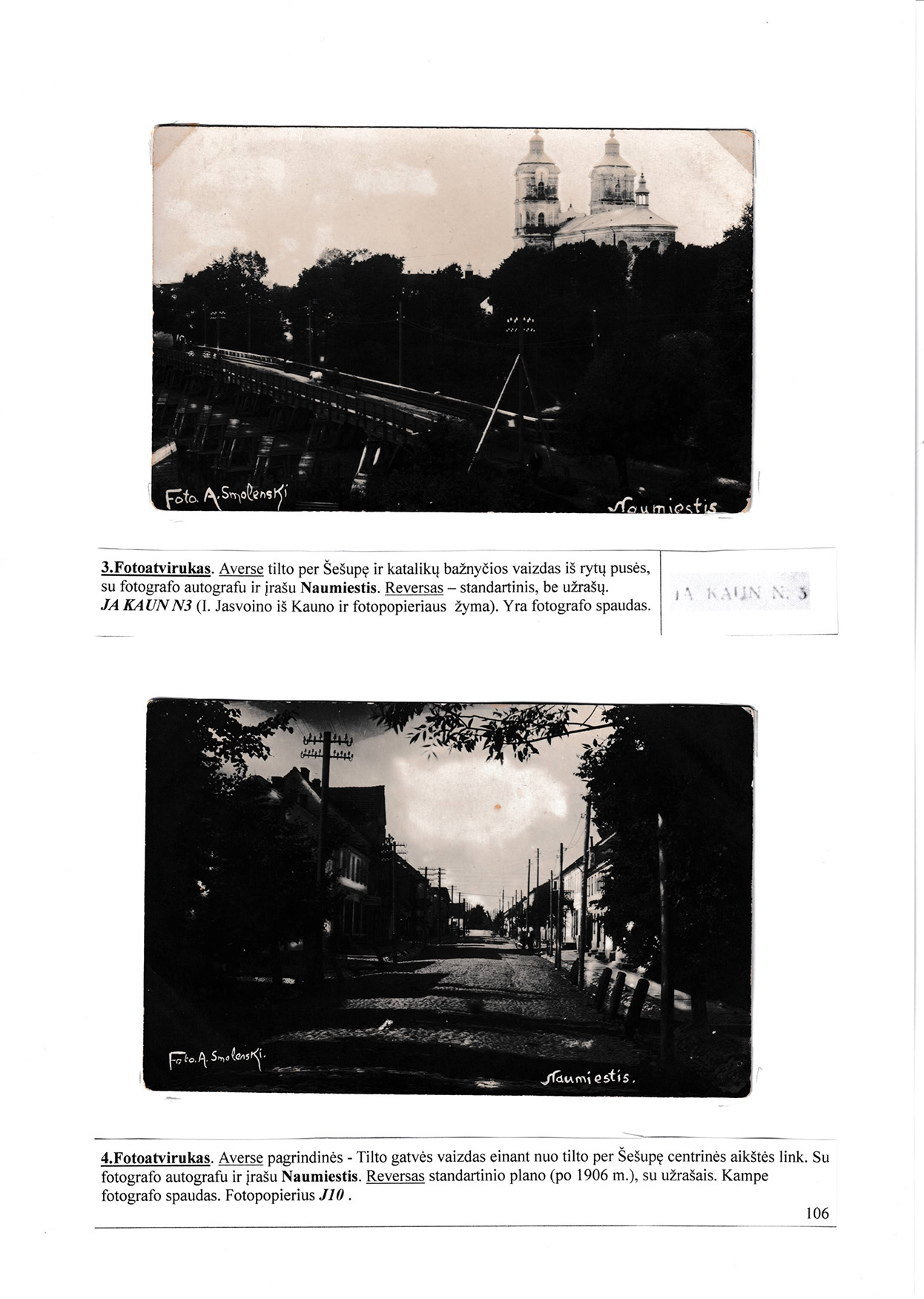
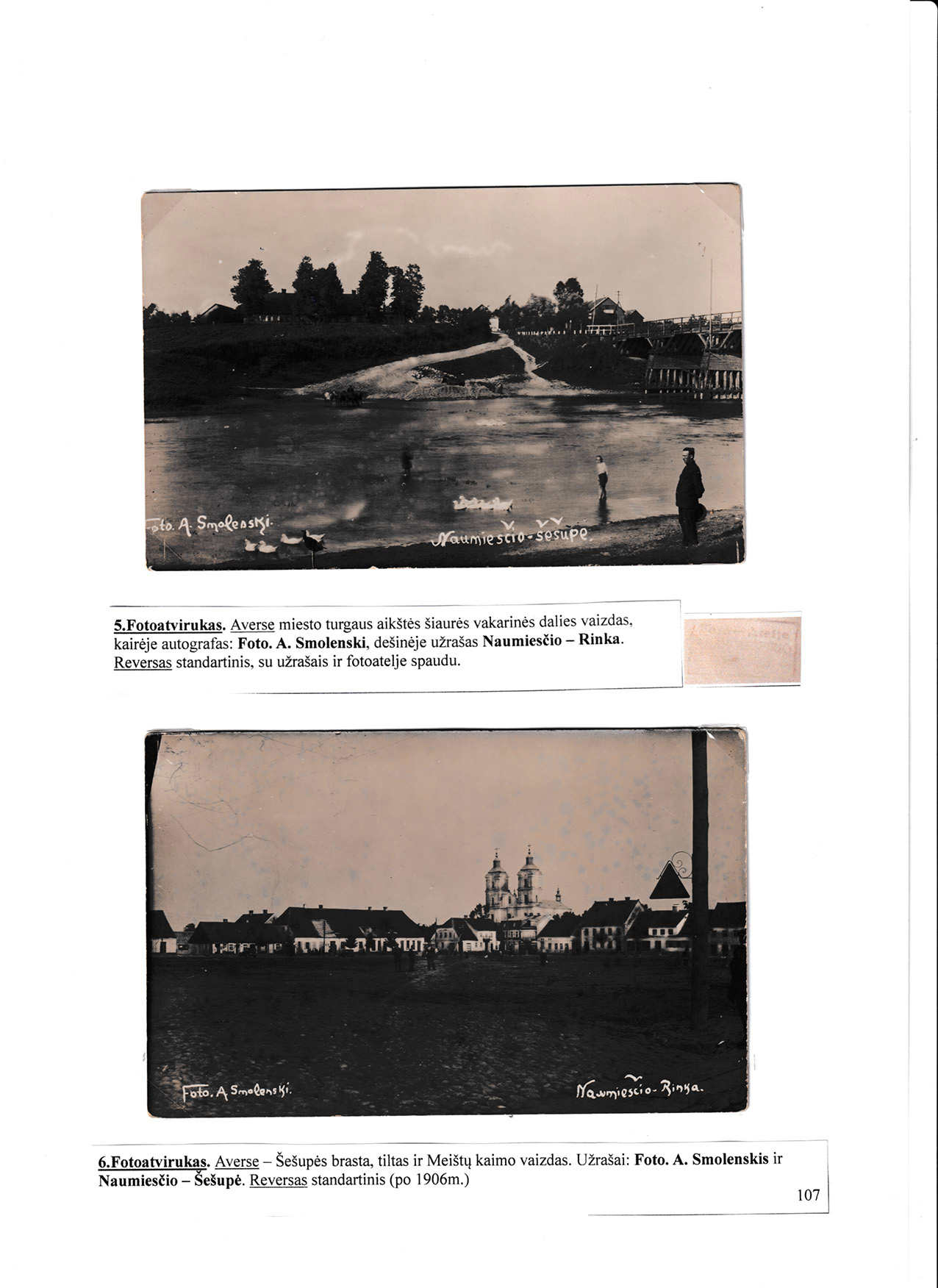
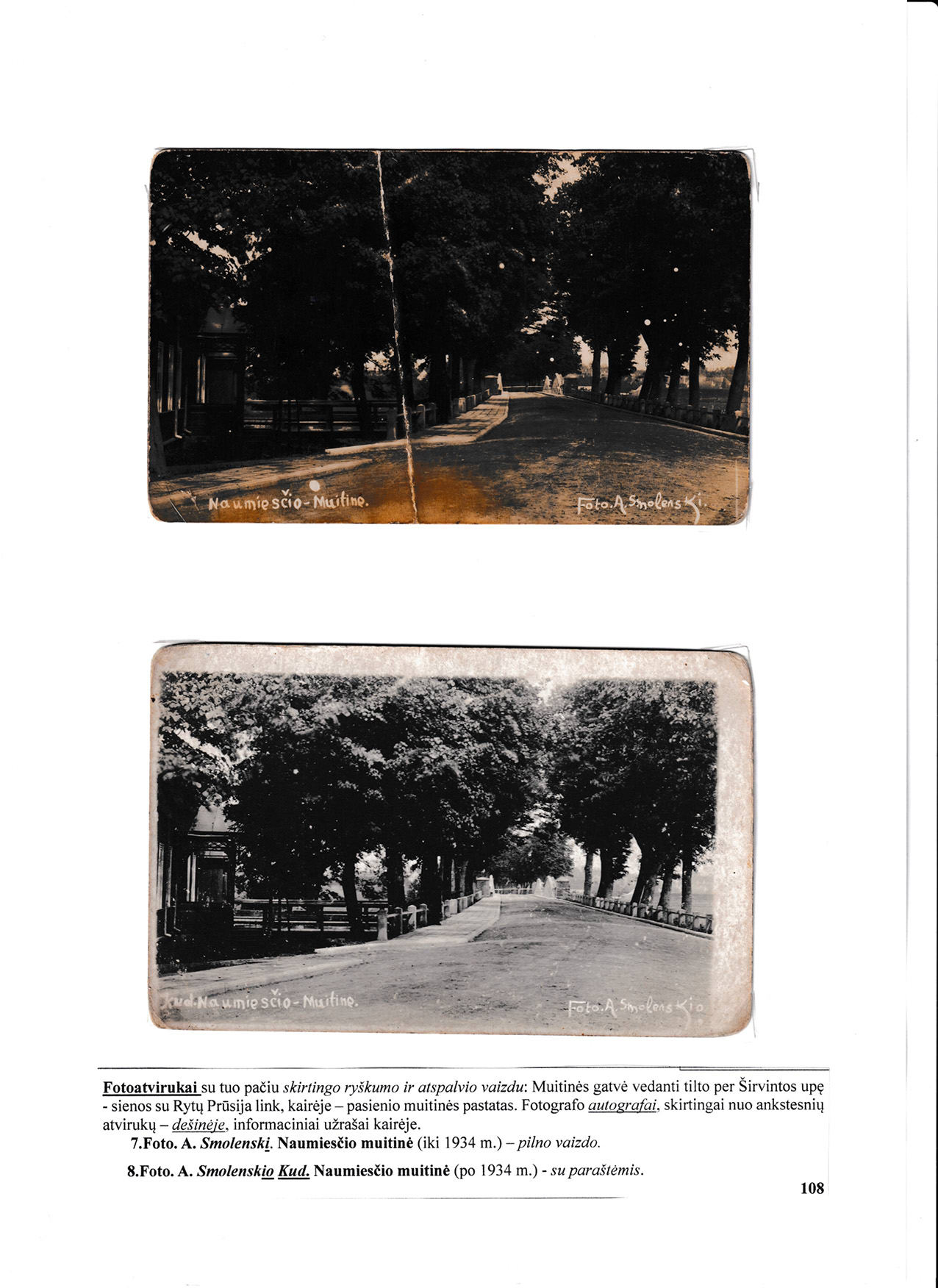
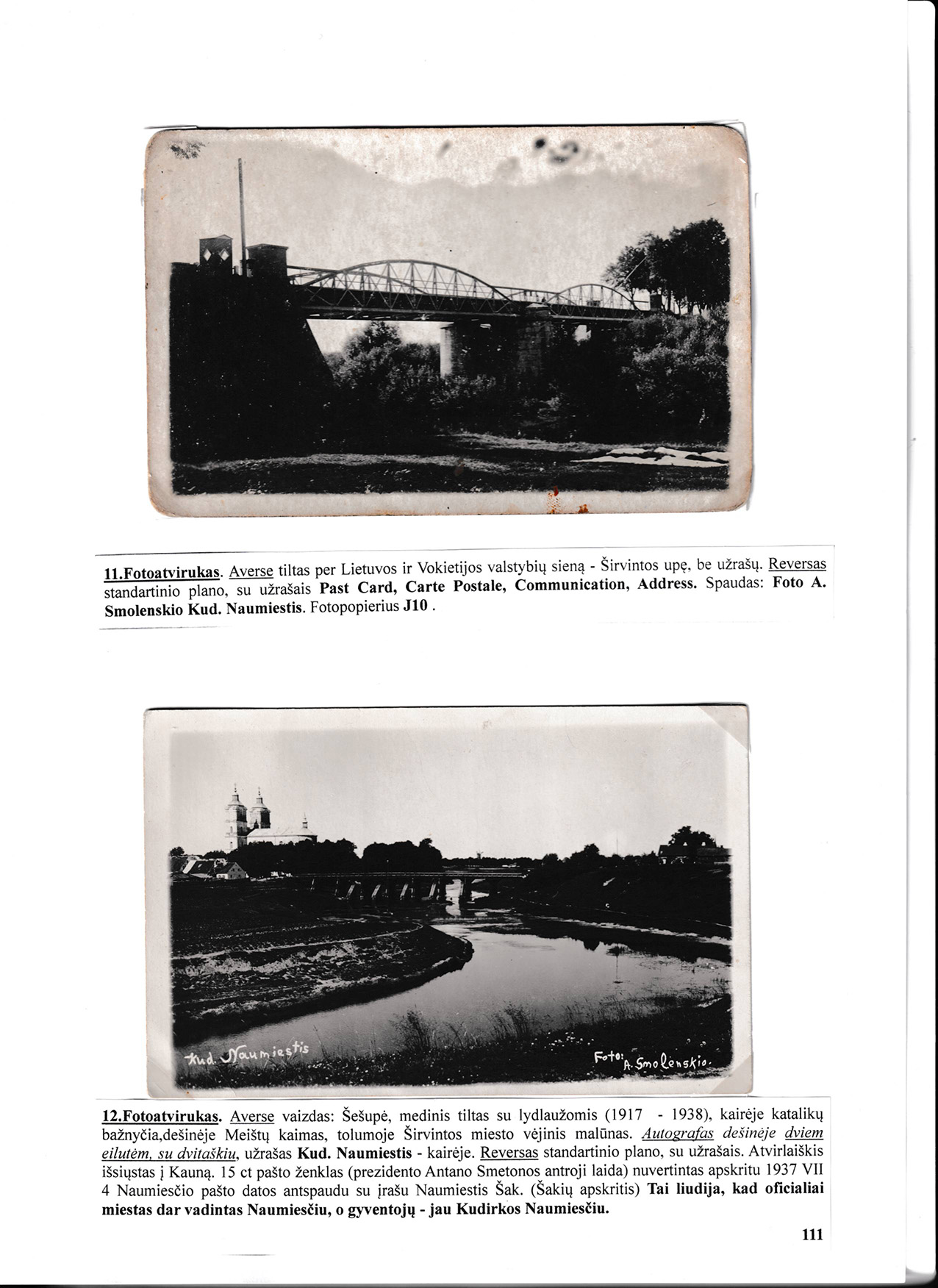
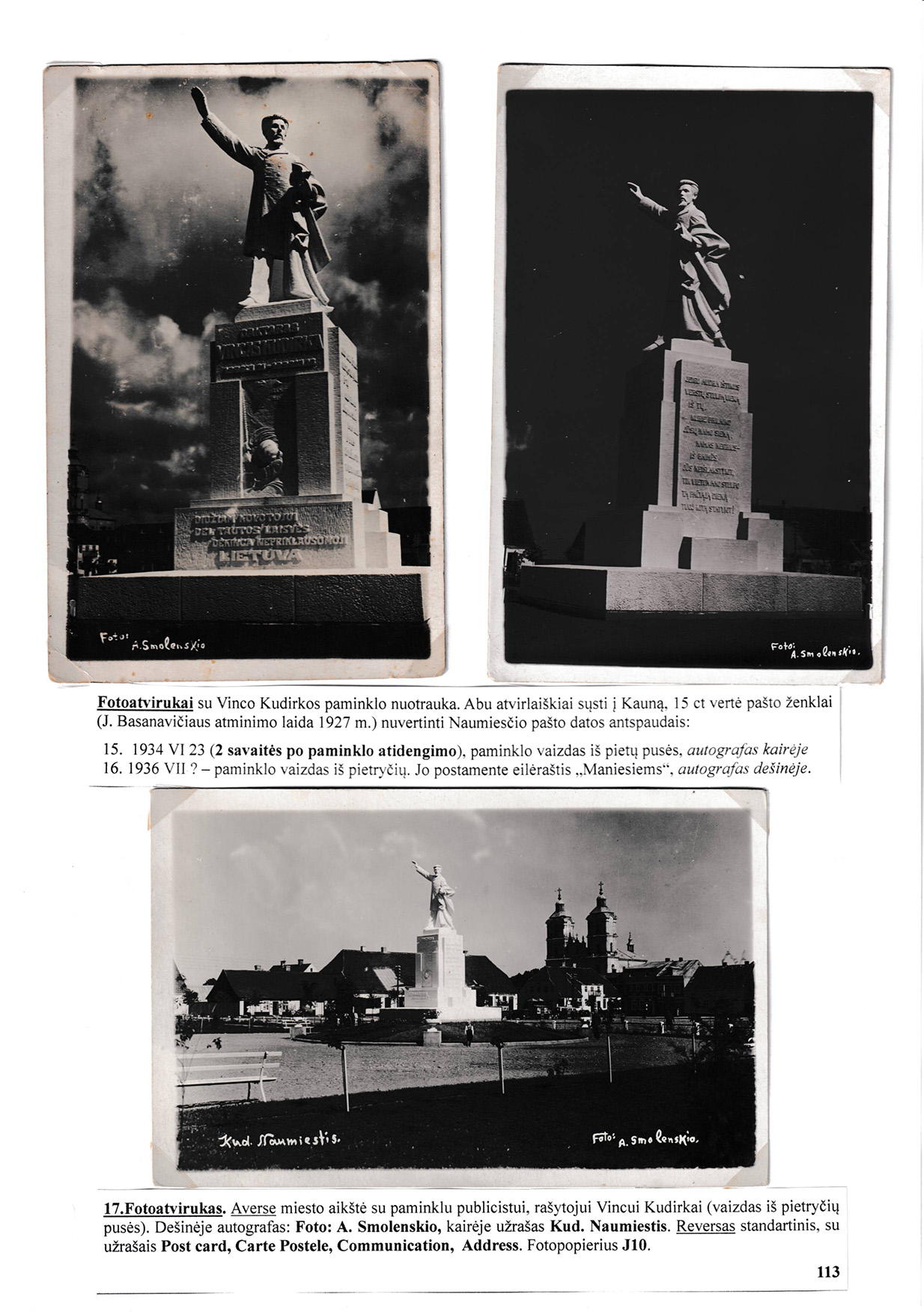
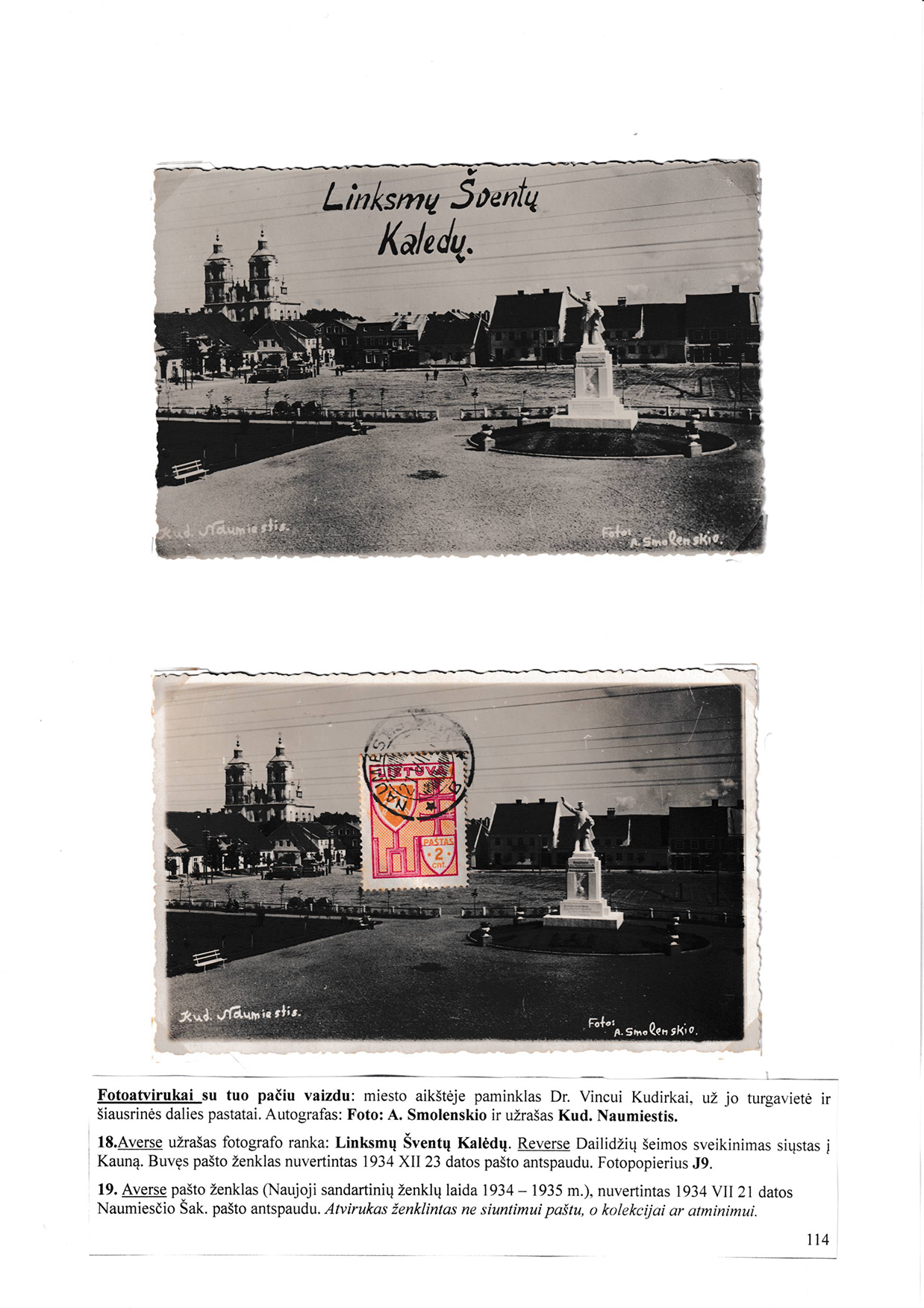
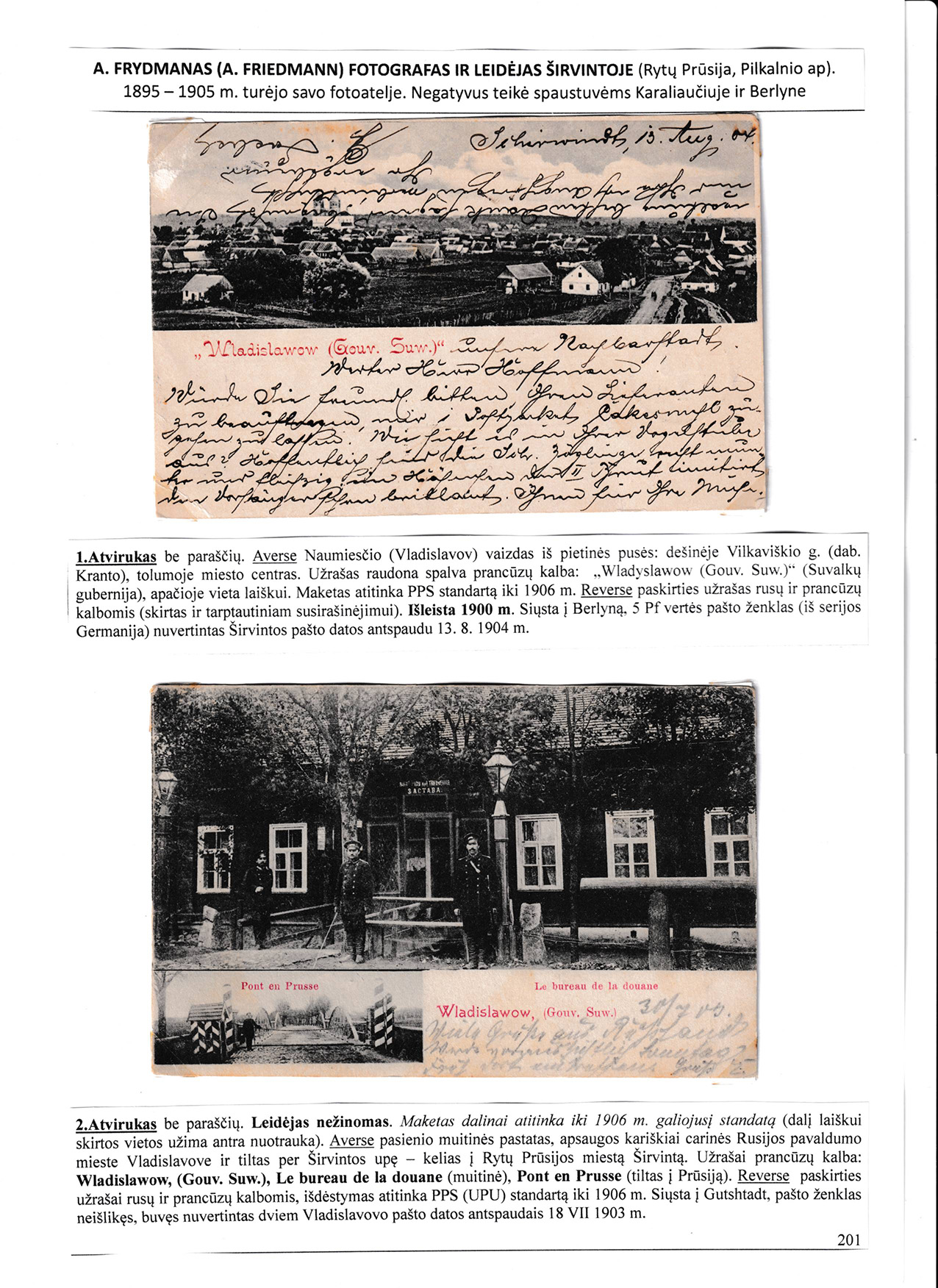
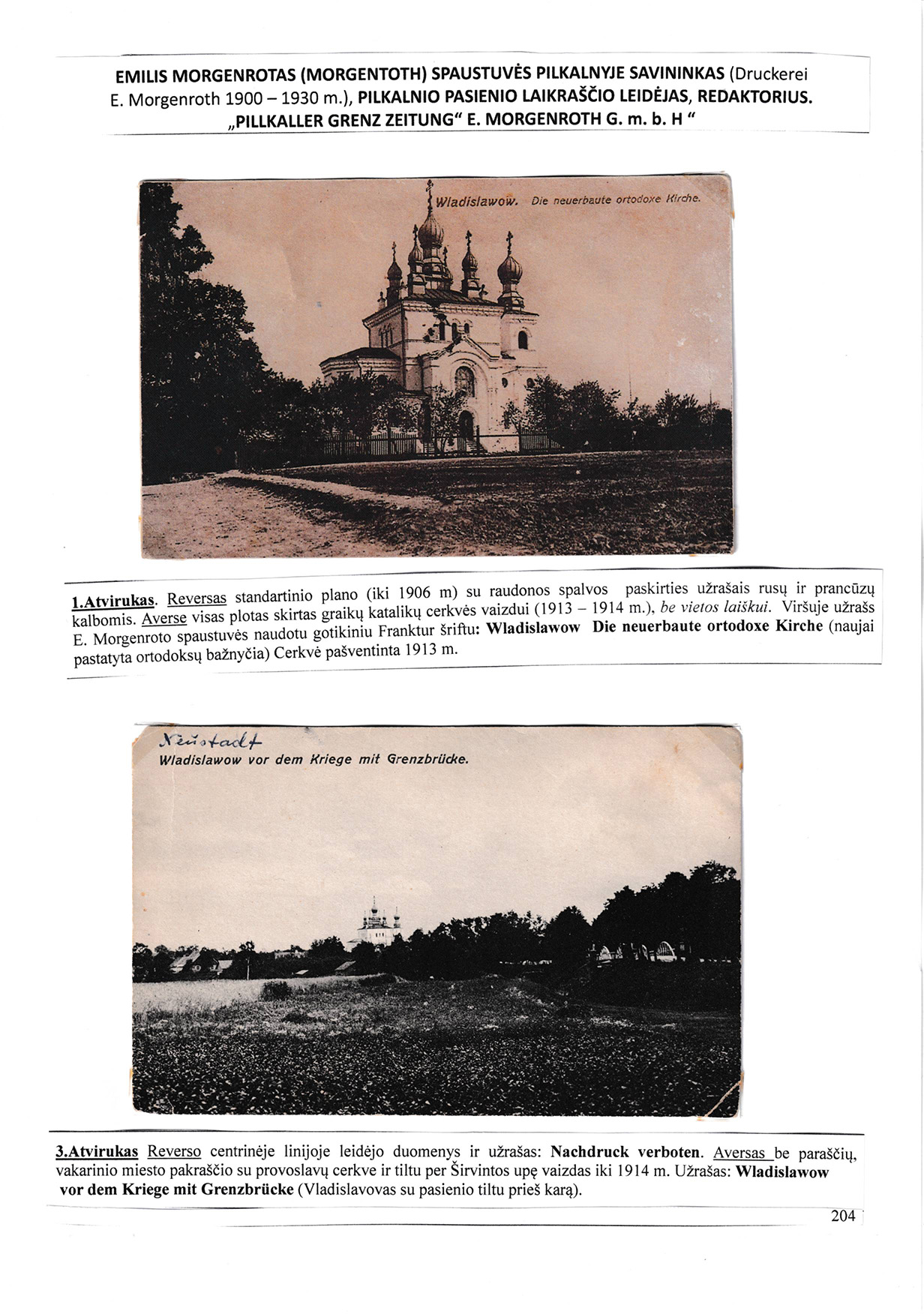
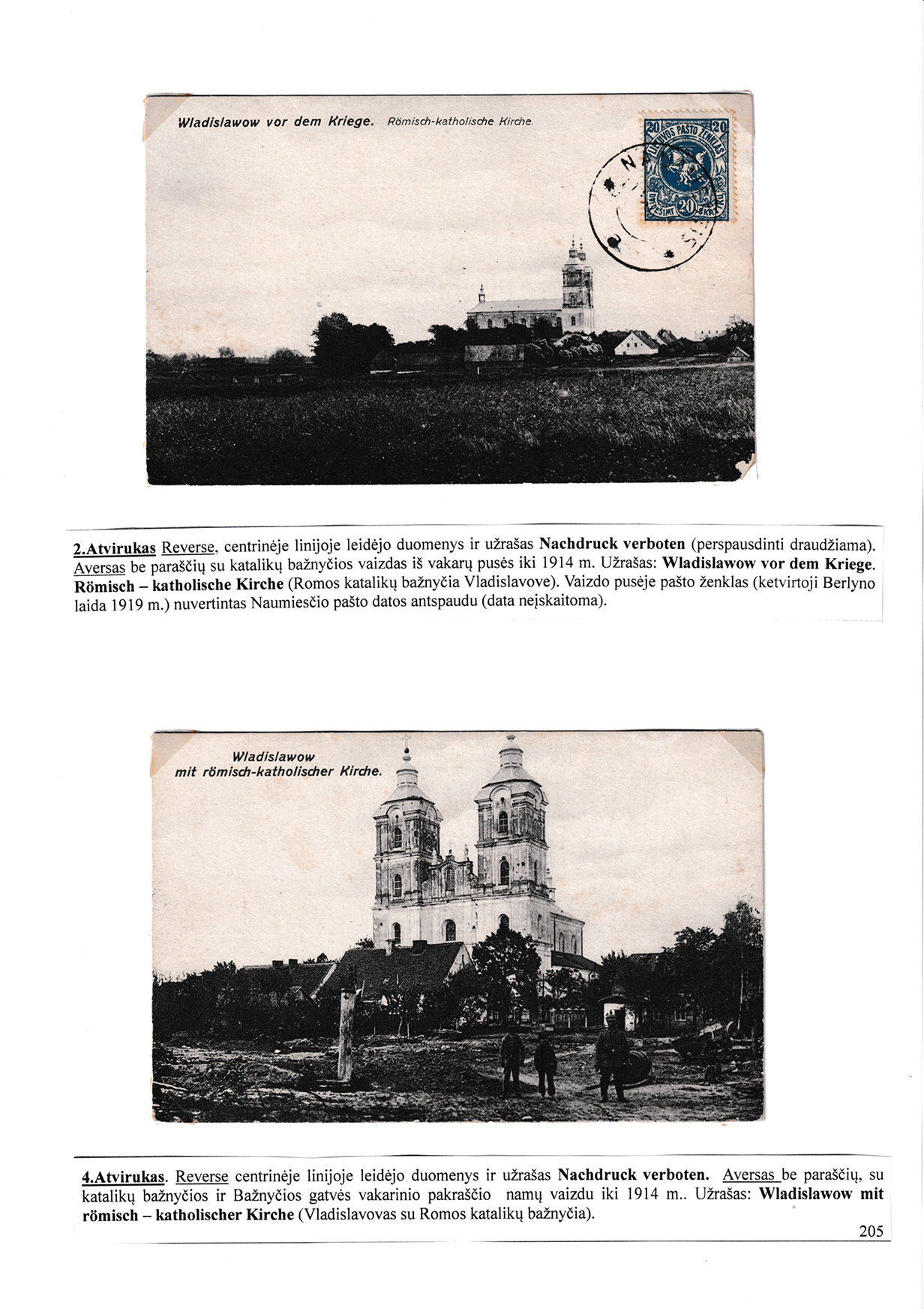
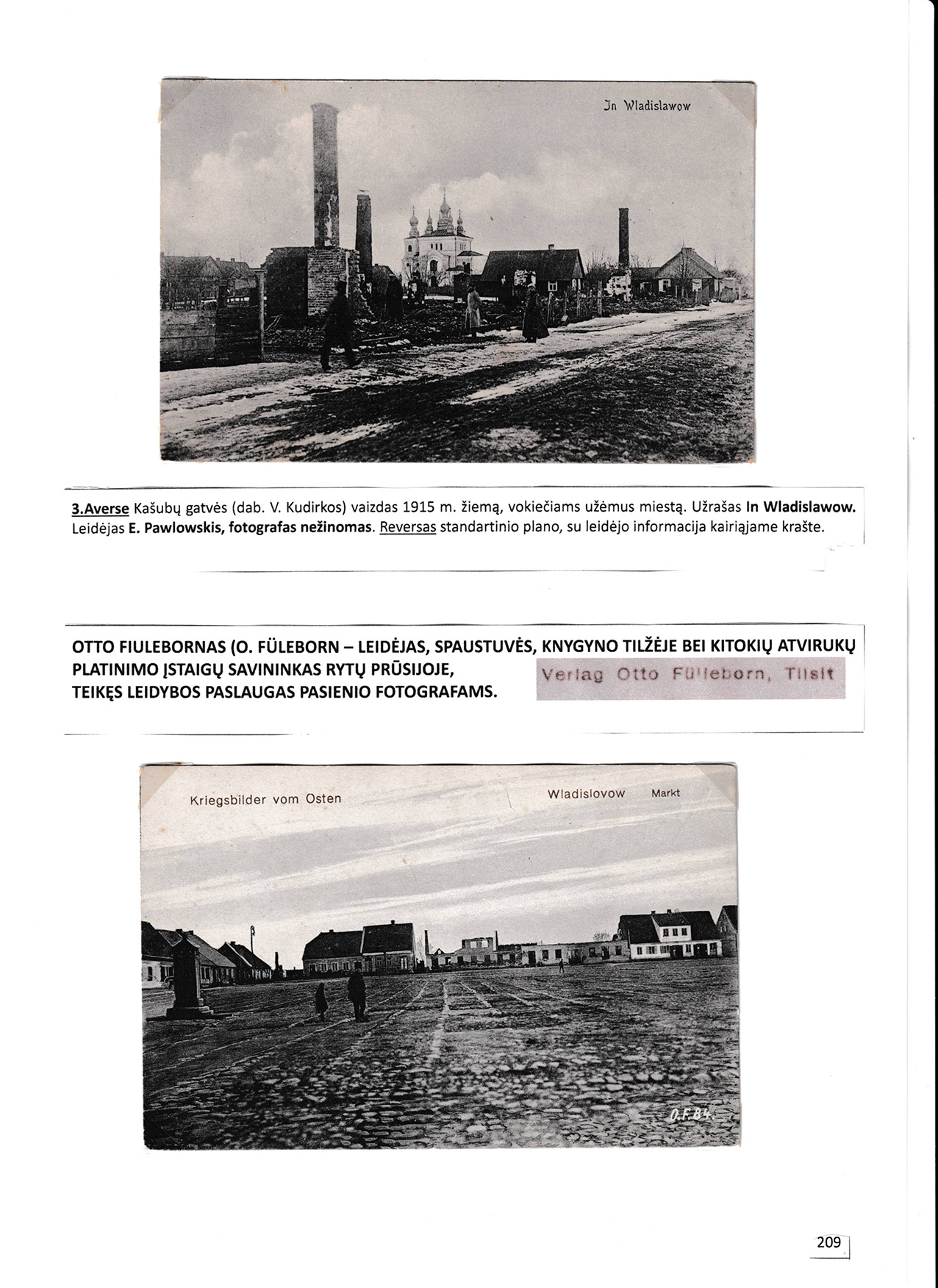
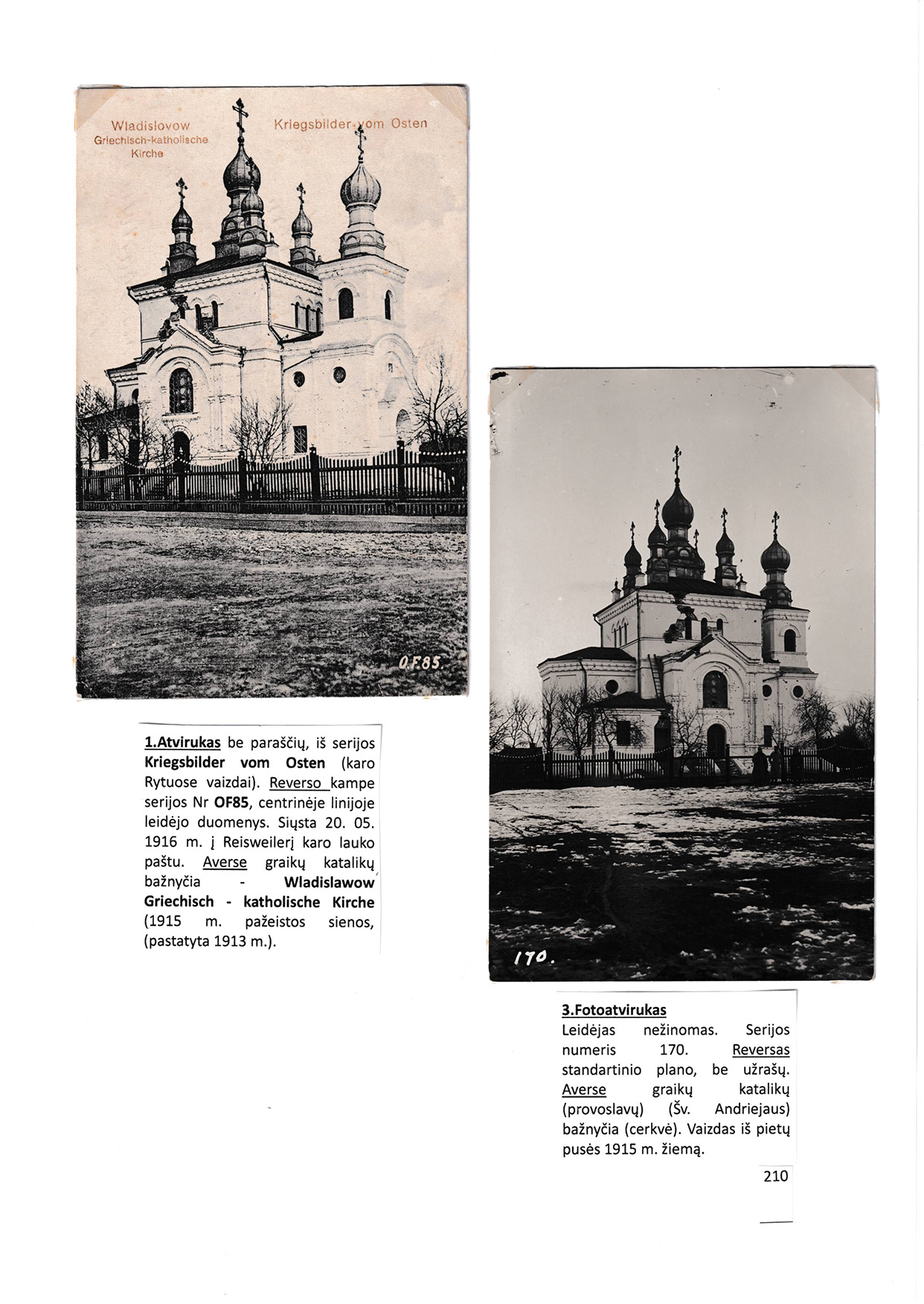
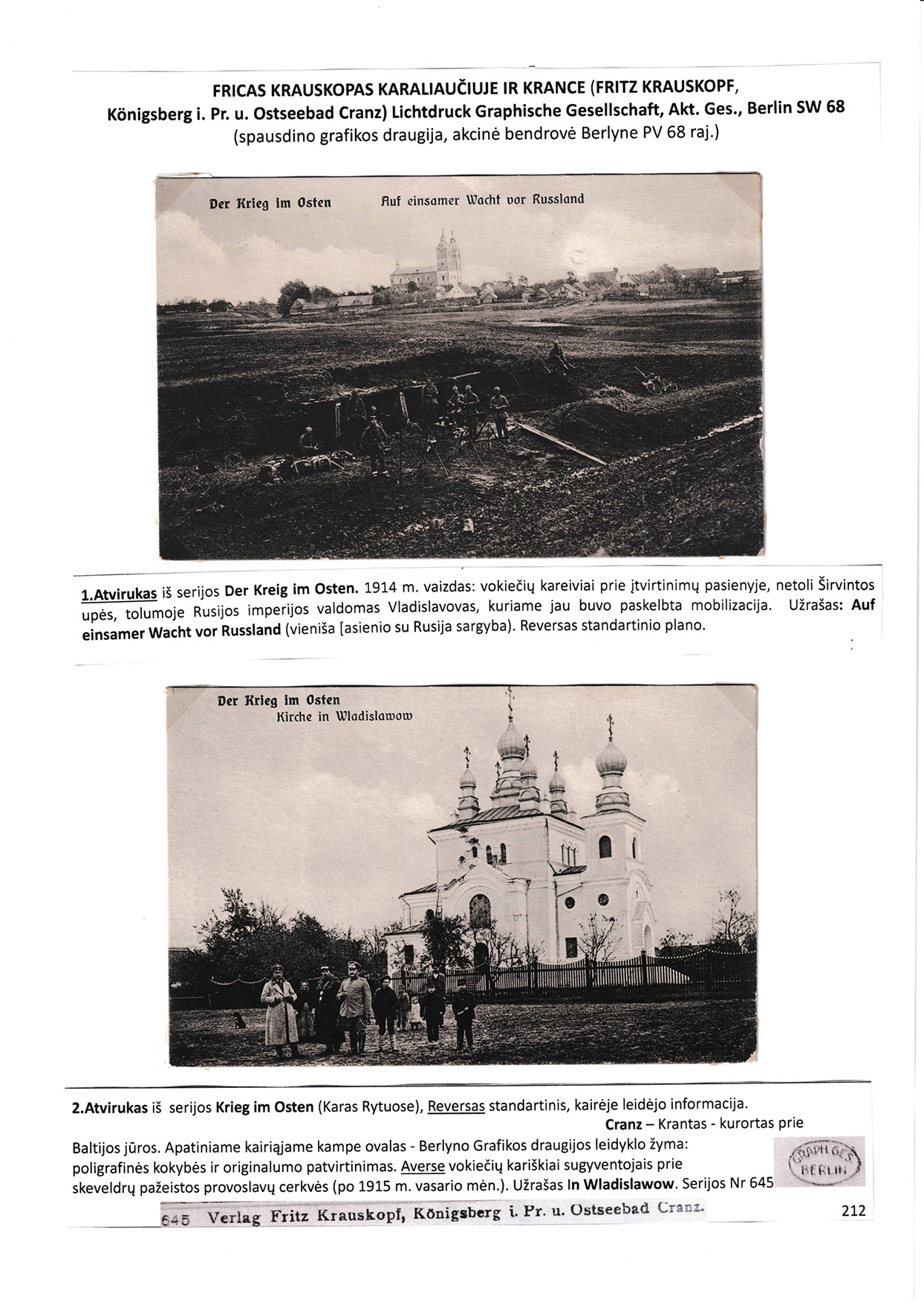
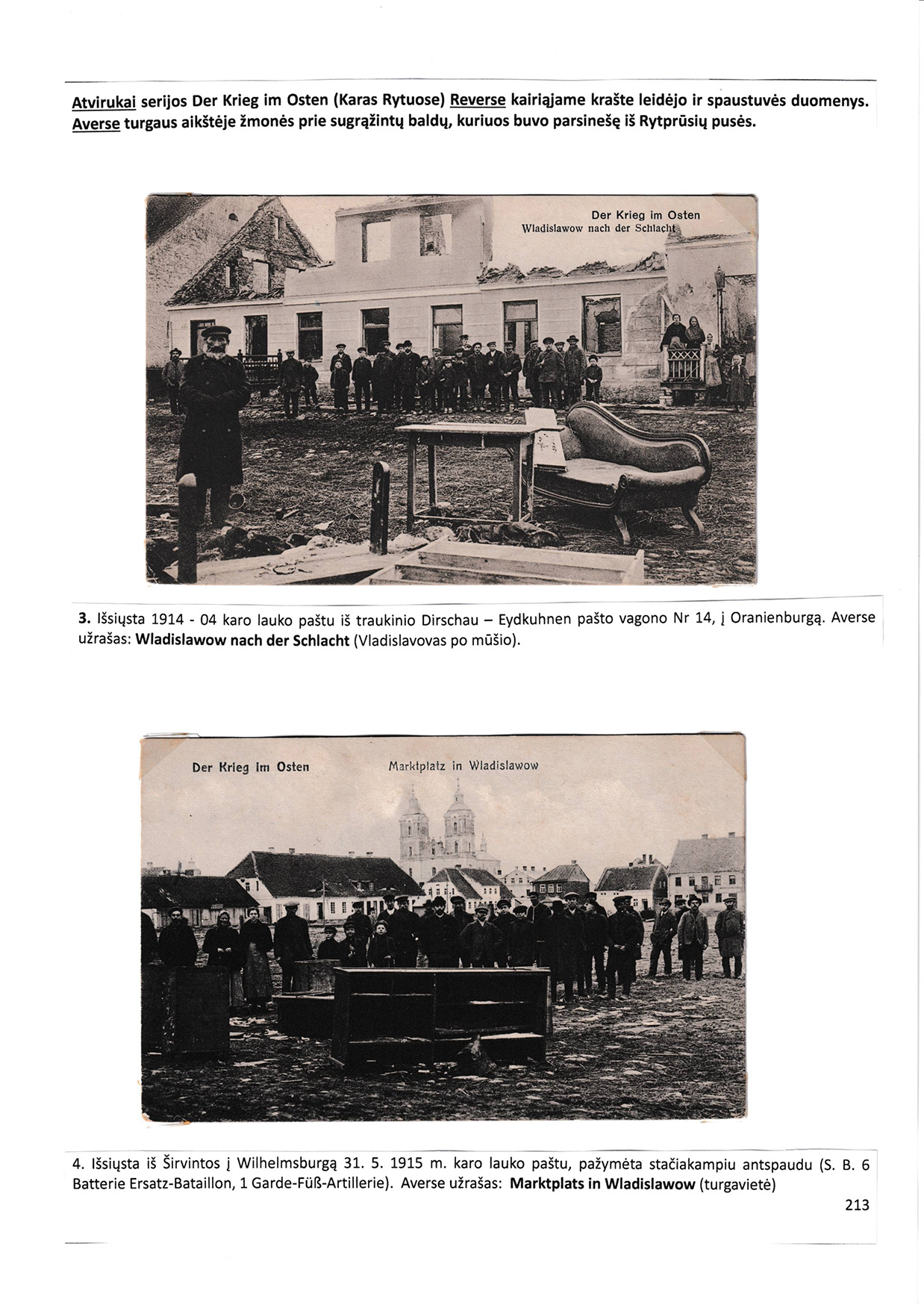
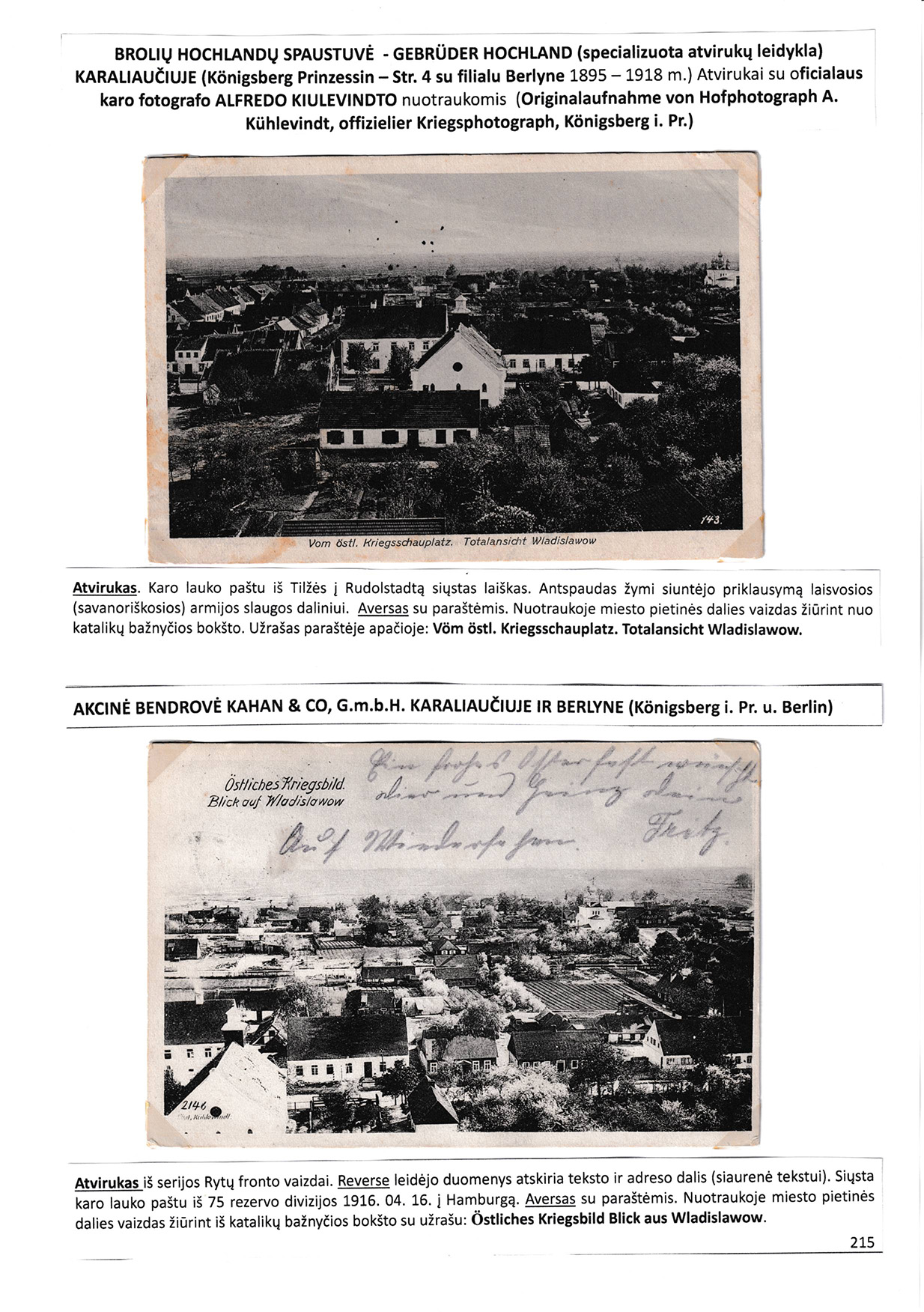
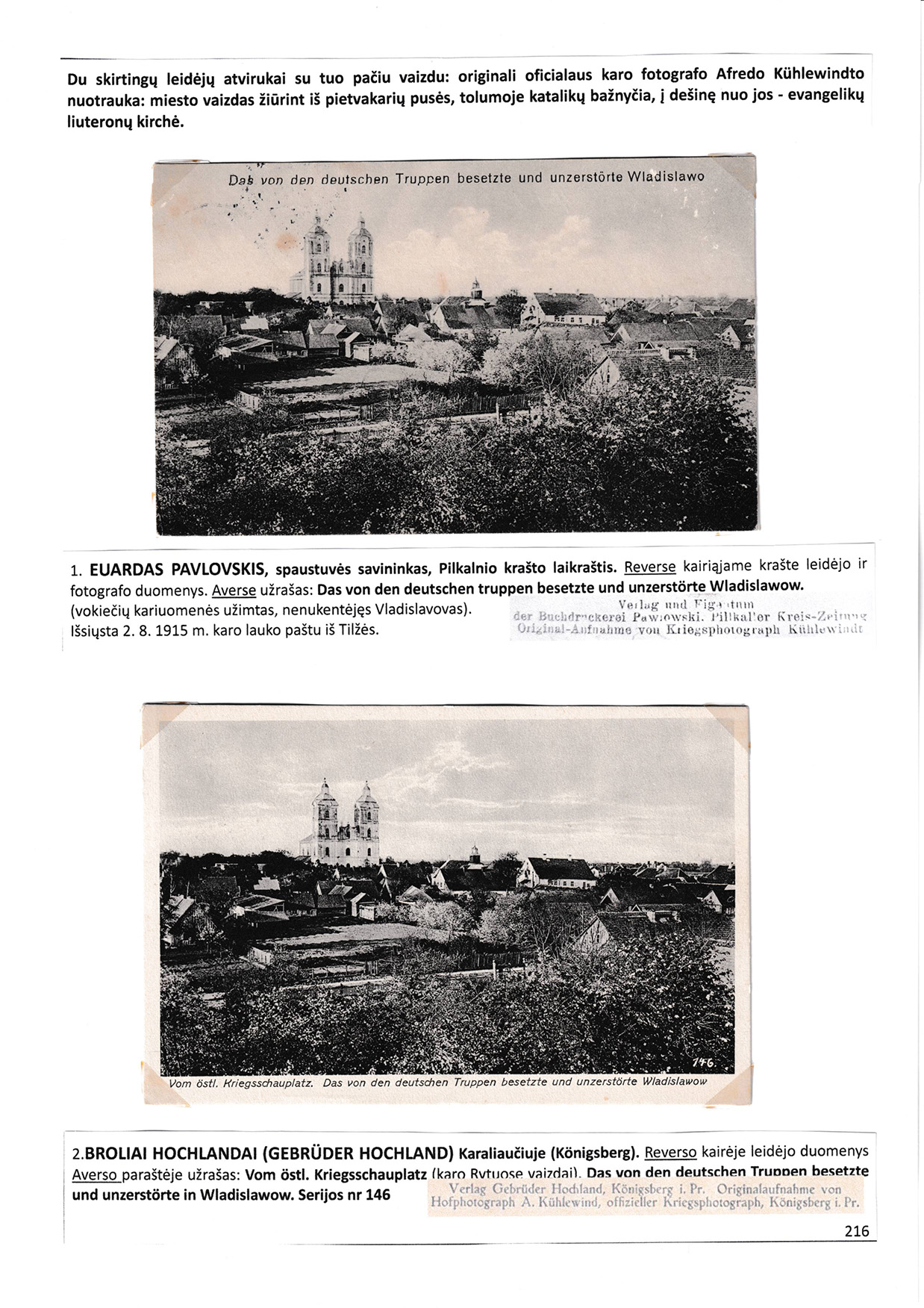
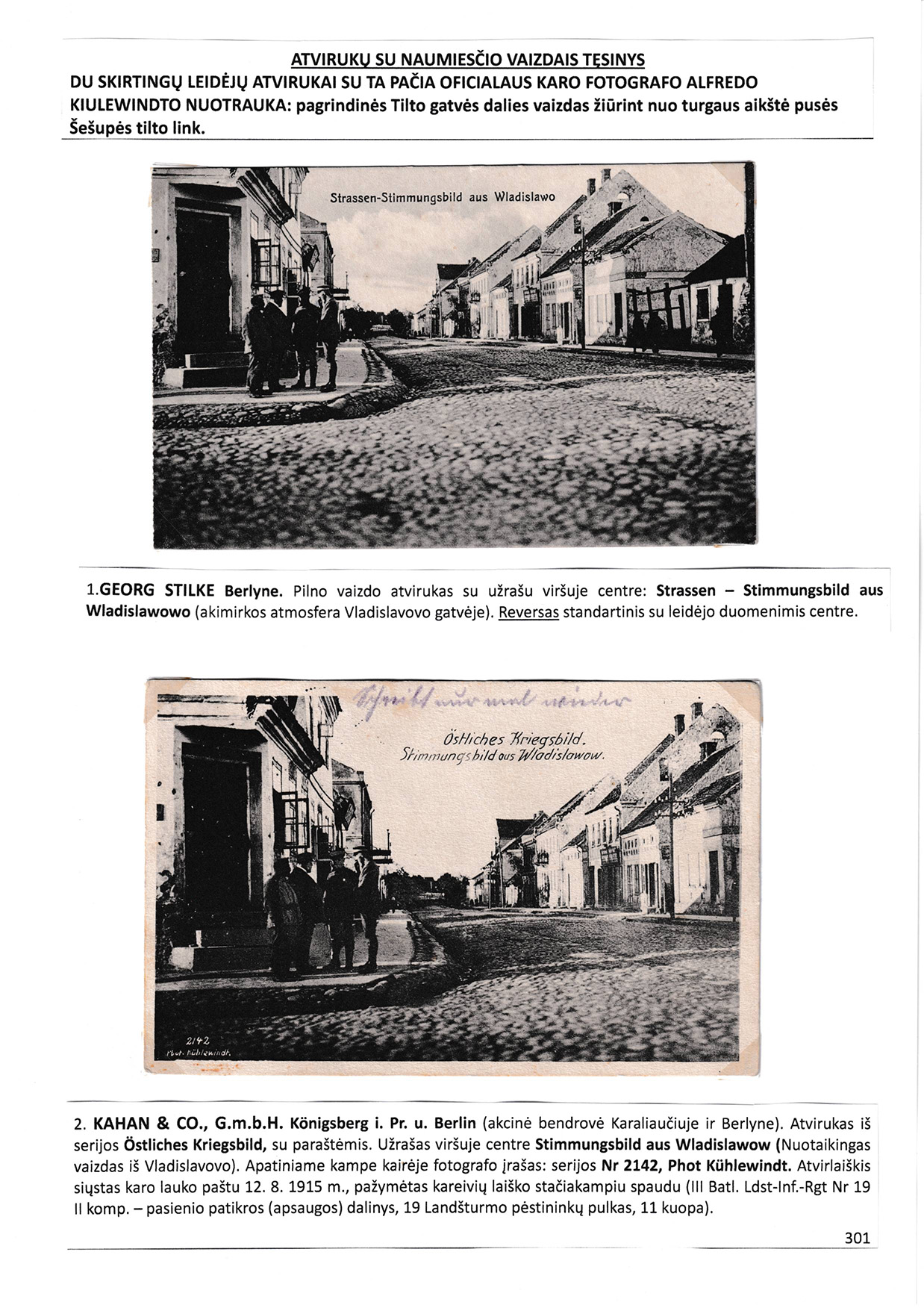
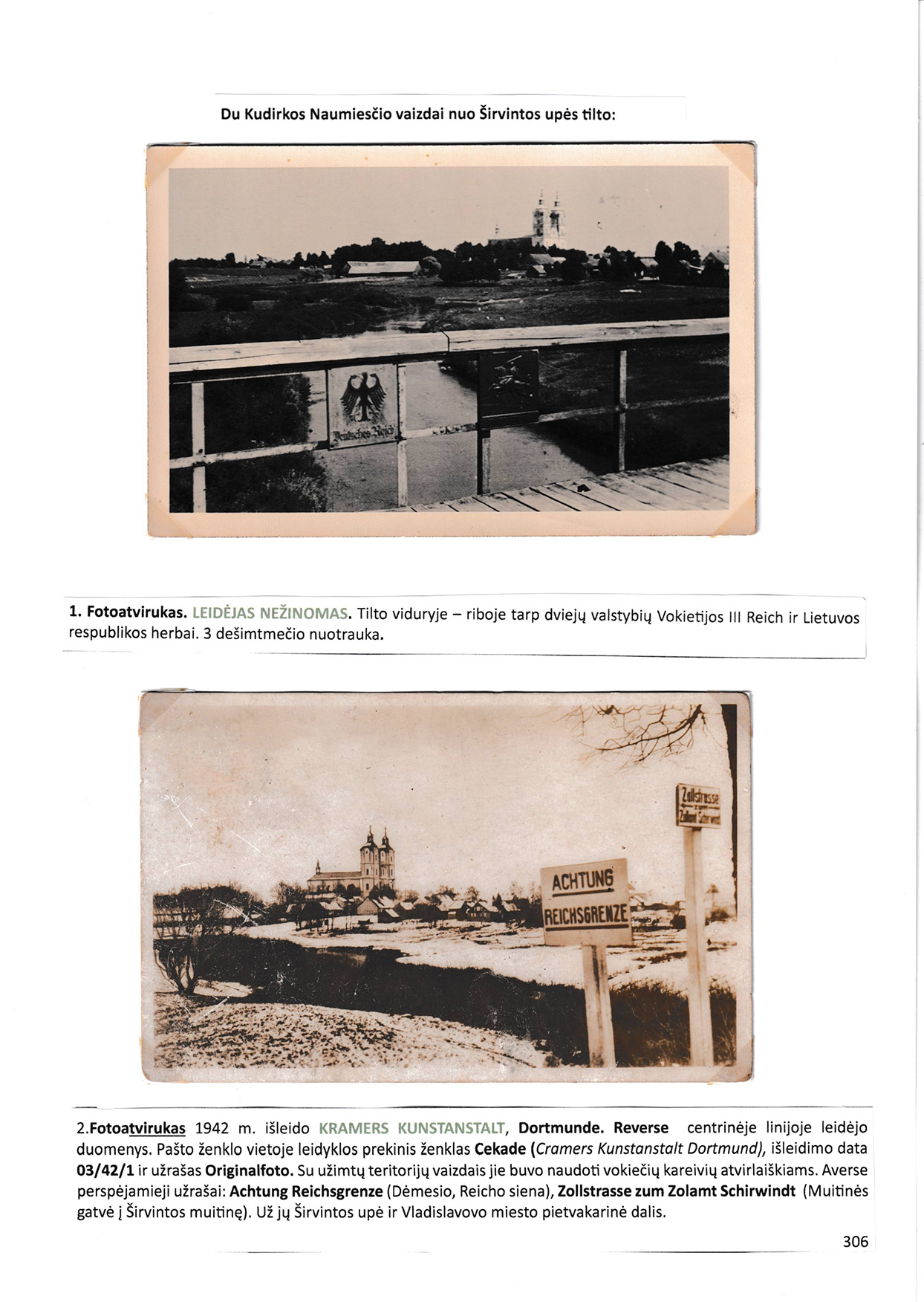
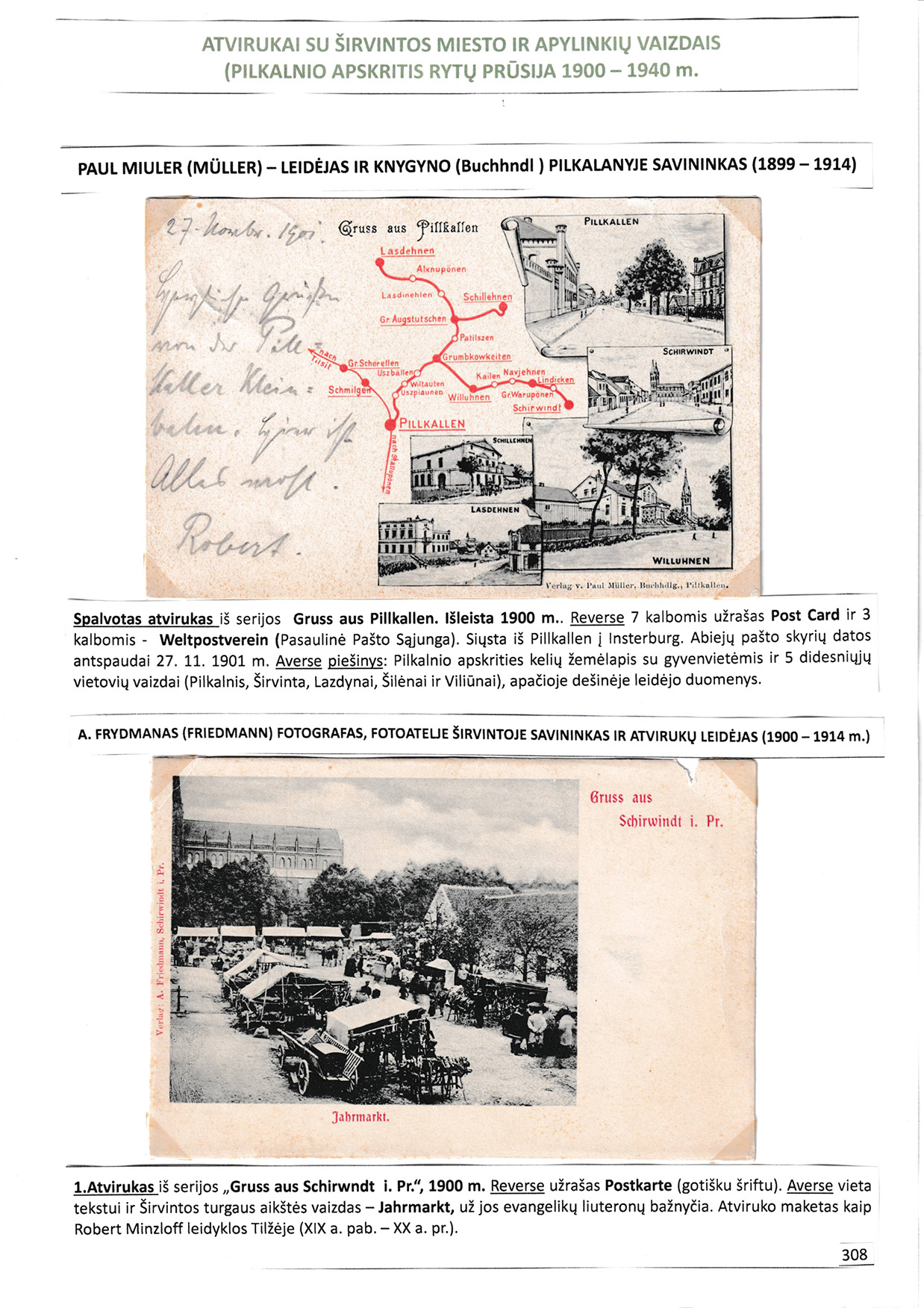
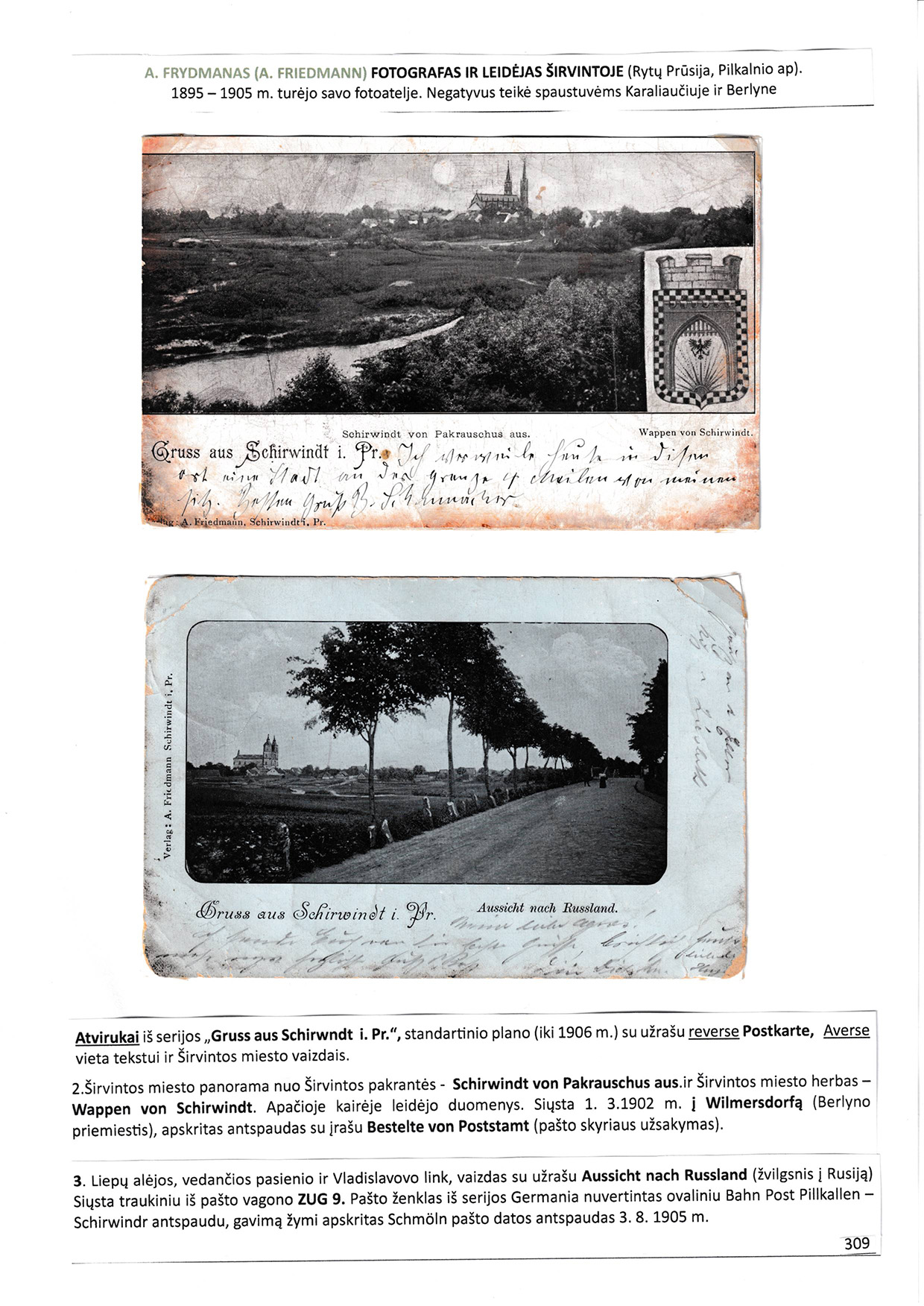
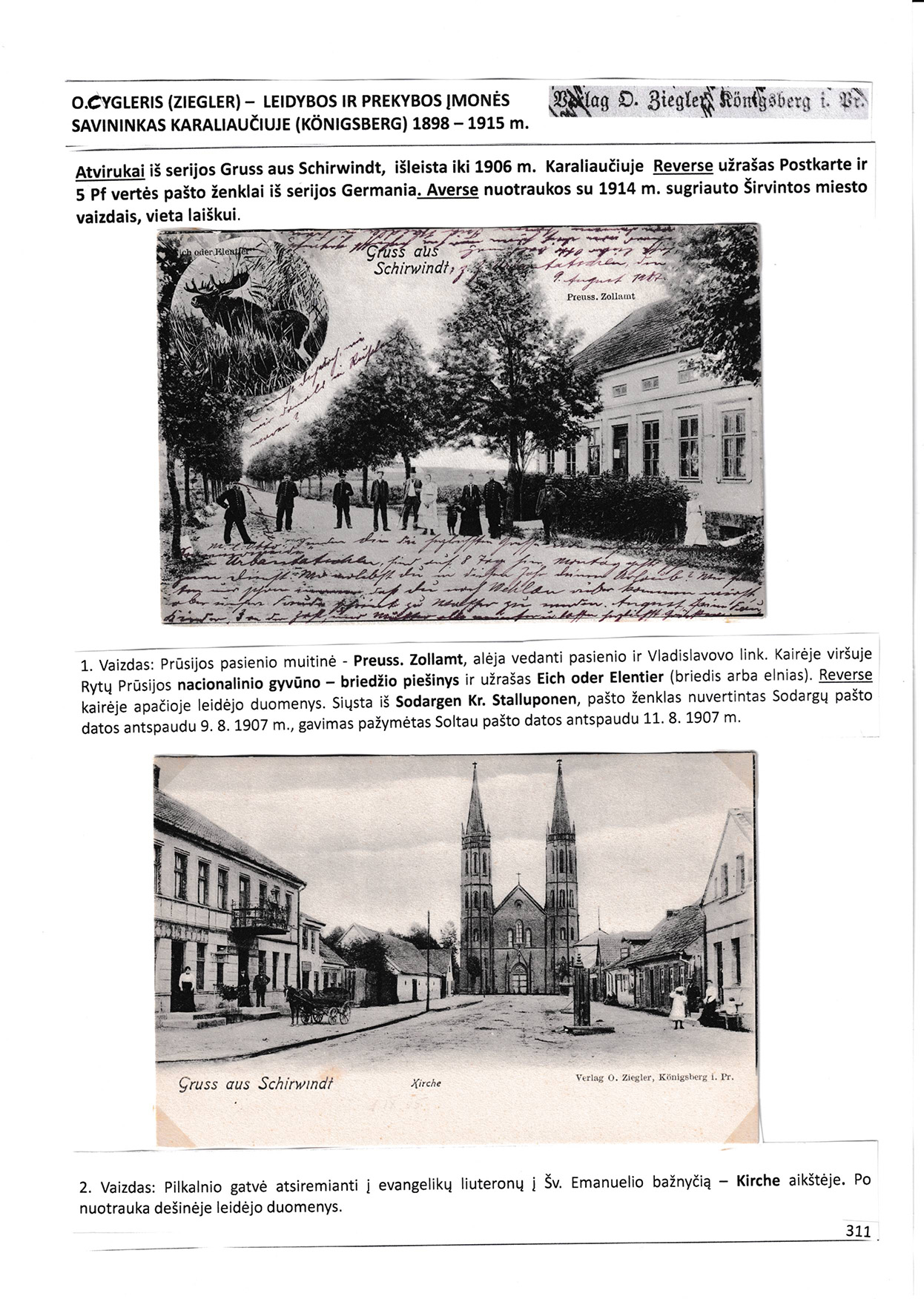
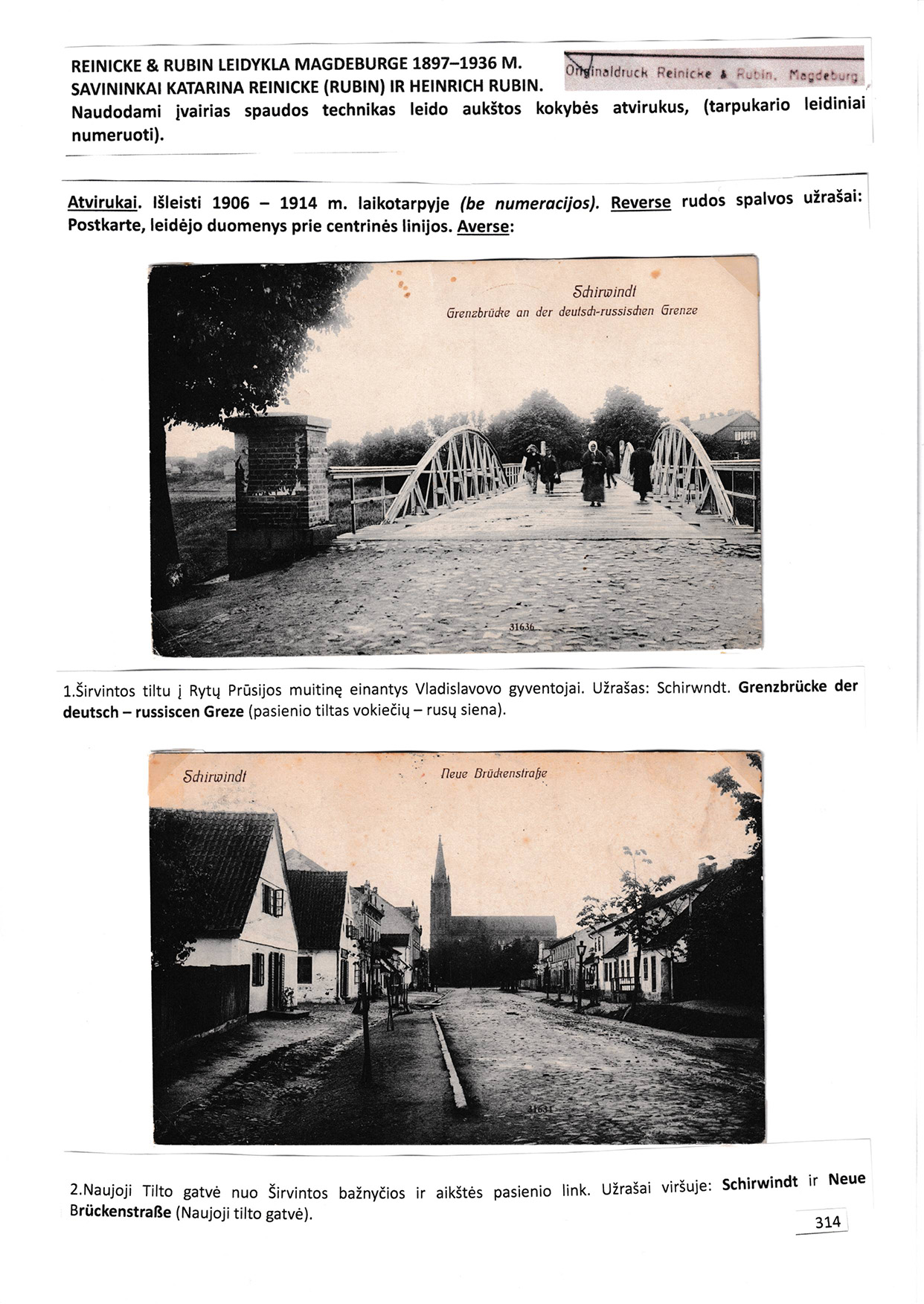
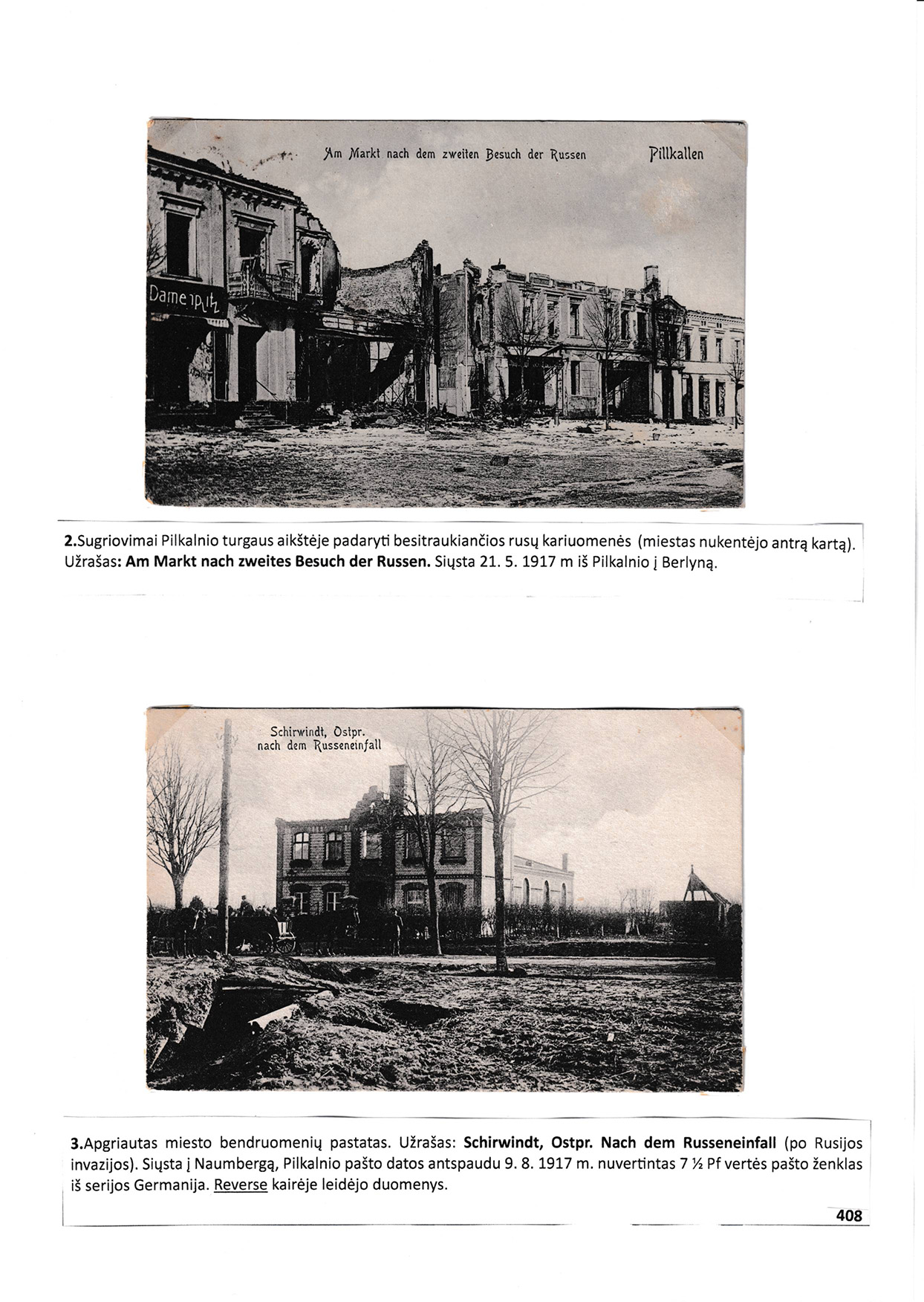
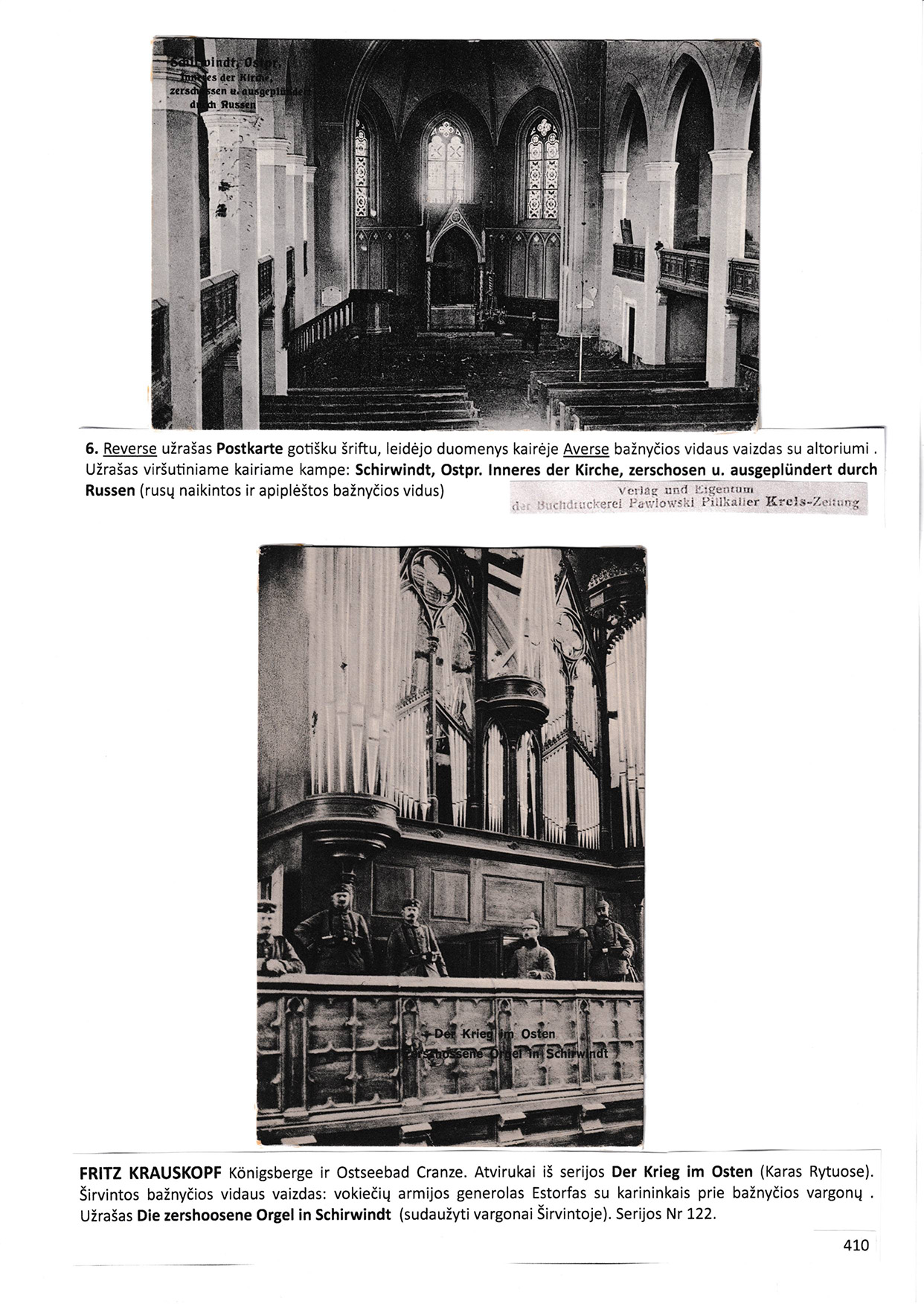
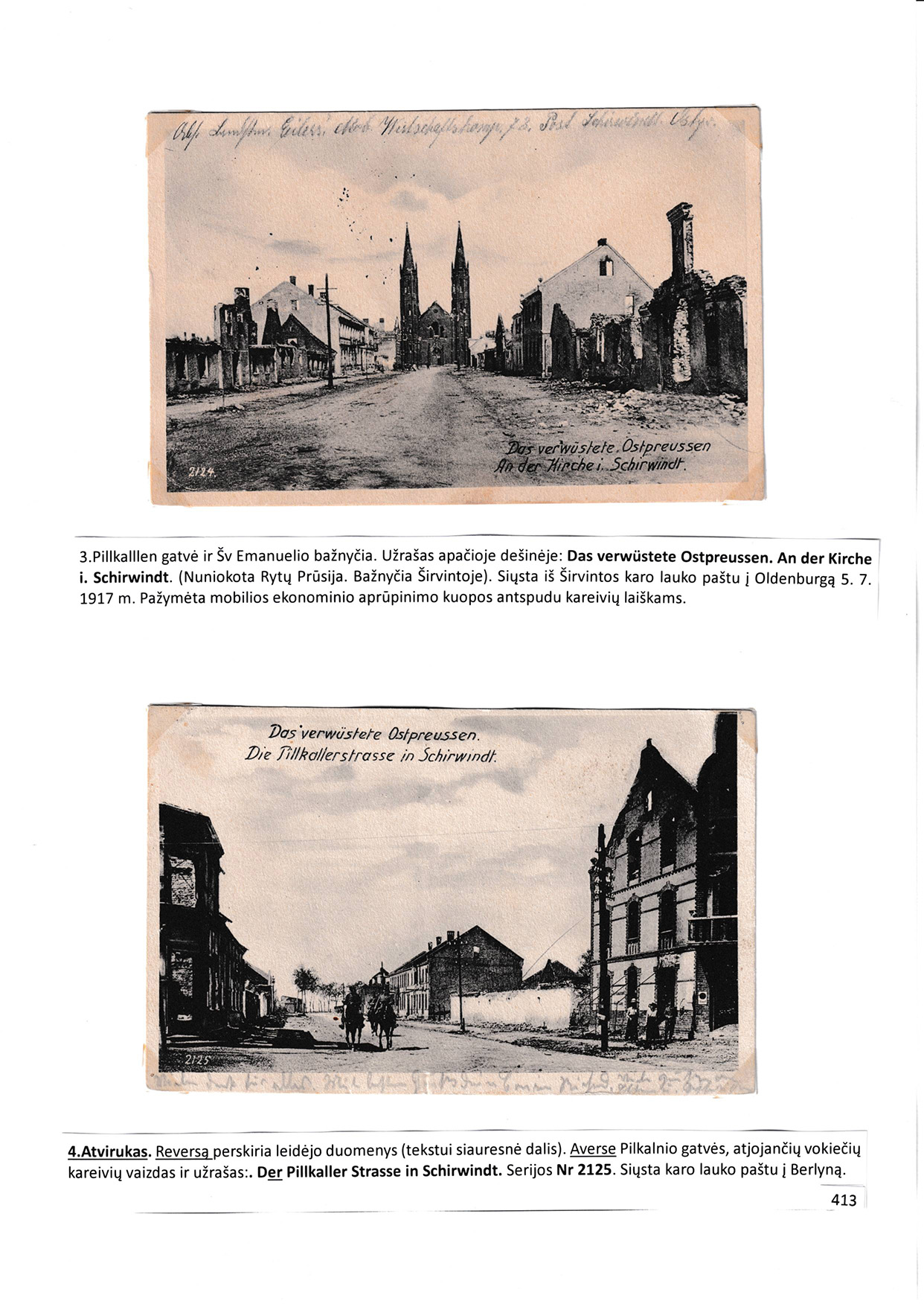
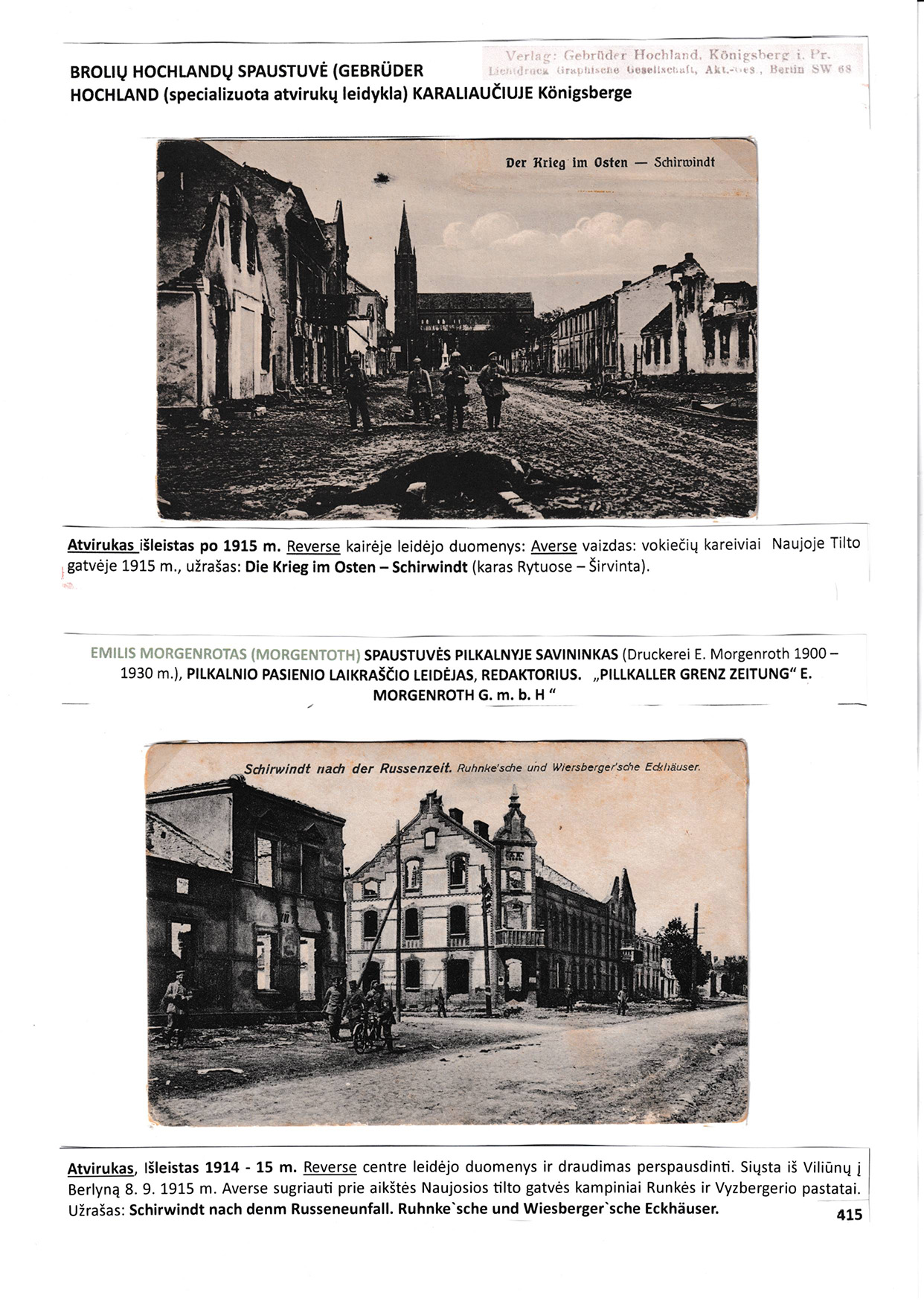
Views of both cities were captured by local and distant photographers, some of the photos were published as postcards. Thanks to them, we can now see what Kudirkos Naumiestis and Širvinta looked like in the first half of the 20th century. This is important because the town of Širvinta is gone. It is the only city in Europe that was not rebuilt after the Second World War. The exhibition presents a collection of our family postcards and their publishing research: postcard publishers, photographers, to whom we are grateful for this historical memory and publishing, printing houses in various European cities.
Based on available information – including postcard images, postmarks, letters from the senders, and publishers’ biographies – the approximate publication periods were determined as follows: 1900–1914 (pre-World War I), 1914–1918 (the war years), and 1918–1942 (the interwar period).
The exhibit consists of 5 frames with 163 postcards: 79 of them were published by 12 local publishing houses operating in the Pilkalnis and Naumiestis counties; 42 are from 6 publishers in East Prussia; 26 from 11 publishers in Germany; 1 from Austria; and 4 postcards by 3 Lithuanian authors, printed in Lithuania, the USA, and Poland.
These publishers did not release catalogs of their production; perhaps such catalogs have not survived or have not been discovered yet. The authors of 11 historical postcards remain unknown. We invite visitors to the exhibition to share any information they may have about them.
Frame 1








Frame 2






Frame 3








Frame 4







Frame 5